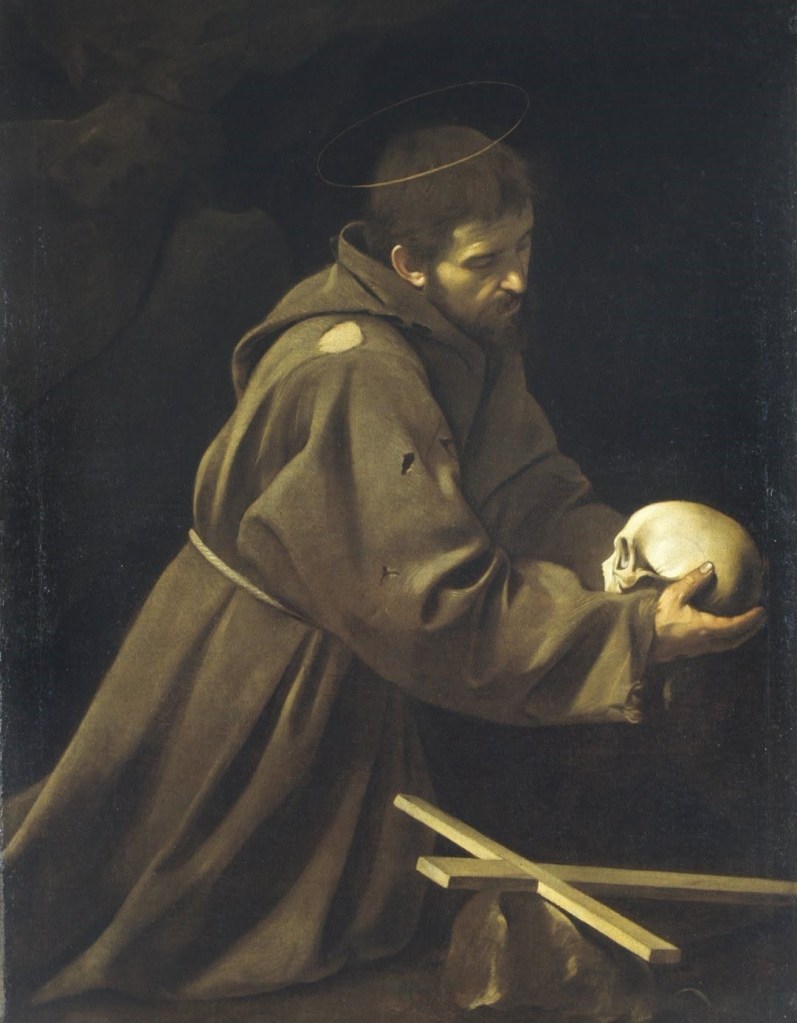
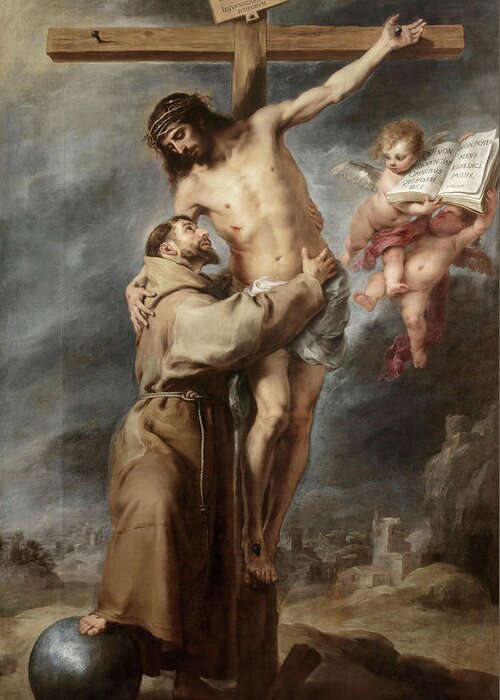
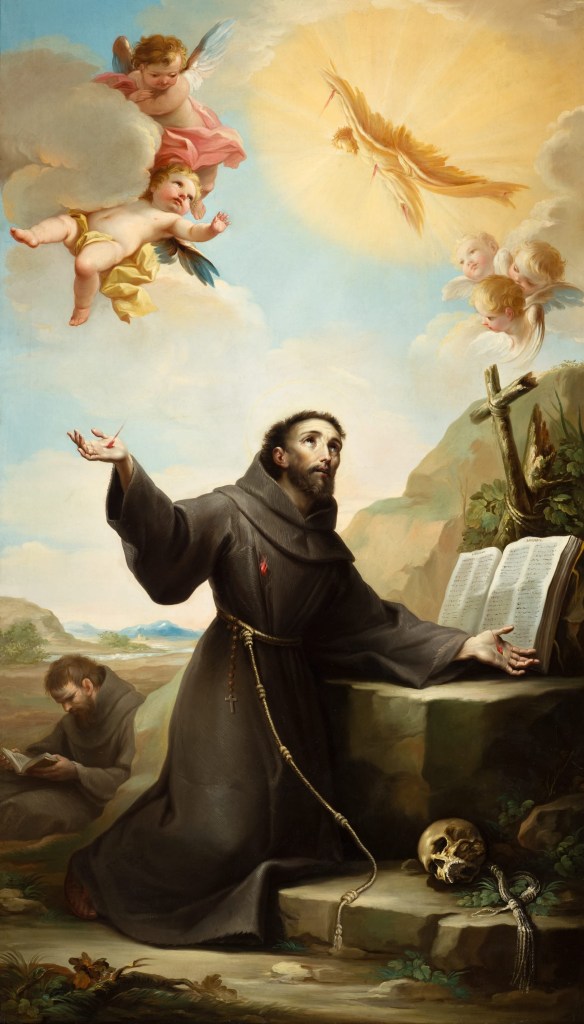
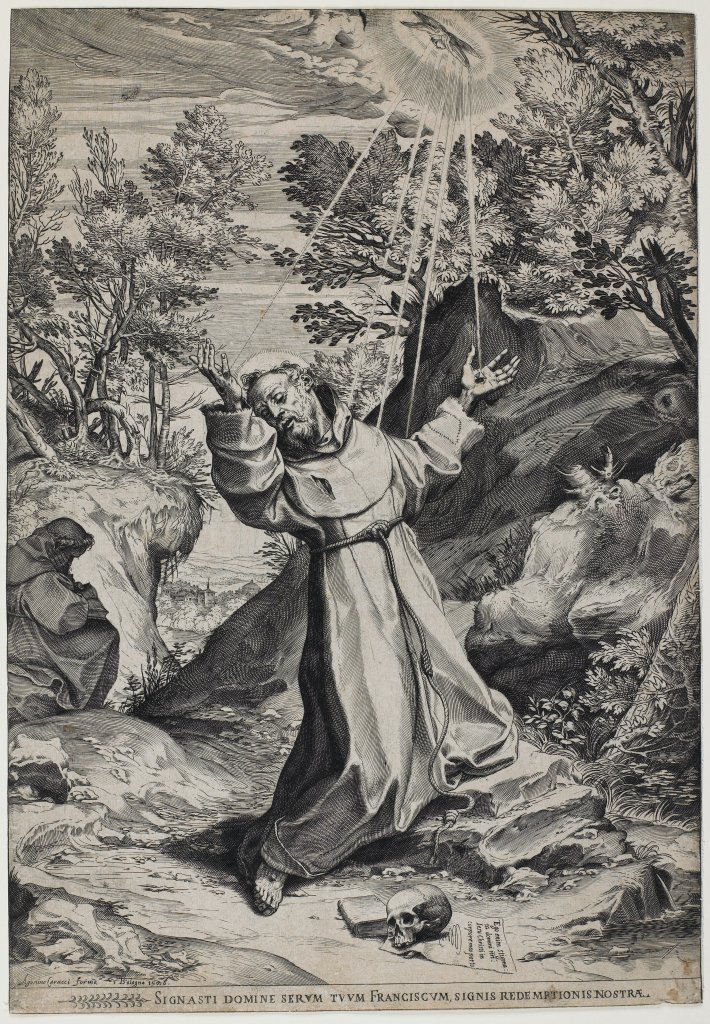
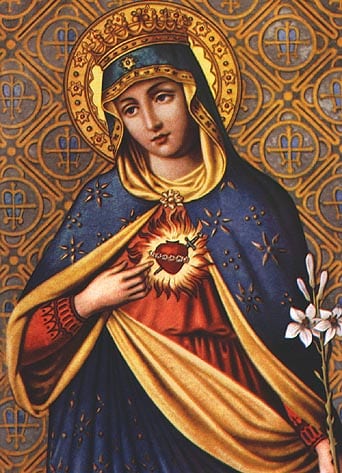
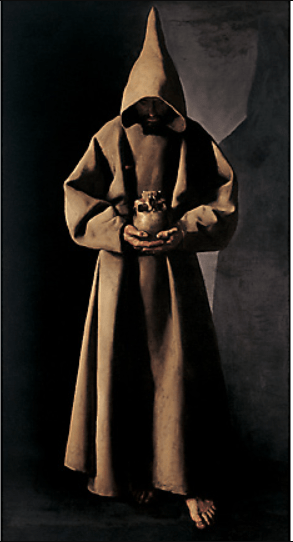
“…Now a few days afterwards, as St Francis was considering the formation of the mountain, and marvelling at the great fissures and openings in the solid rock, it was revealed to him by God in prayer that these strange caverns had been made miraculously at the hour of the Passion of Christ, when, according to the Evangelist’s words, the rocks were rent; and this was by the will of God, who manifested himself thus wonderfully upon Mount Alvernia, because there the Passion of our Lord Jesus Christ was to be renewed in the soul of his servant by love and compassion, and in his body by the impression of the sacred, holy stigmata.”
Taken from “The Little Flowers of St. Francis of Assisi” by Brother Ugolino
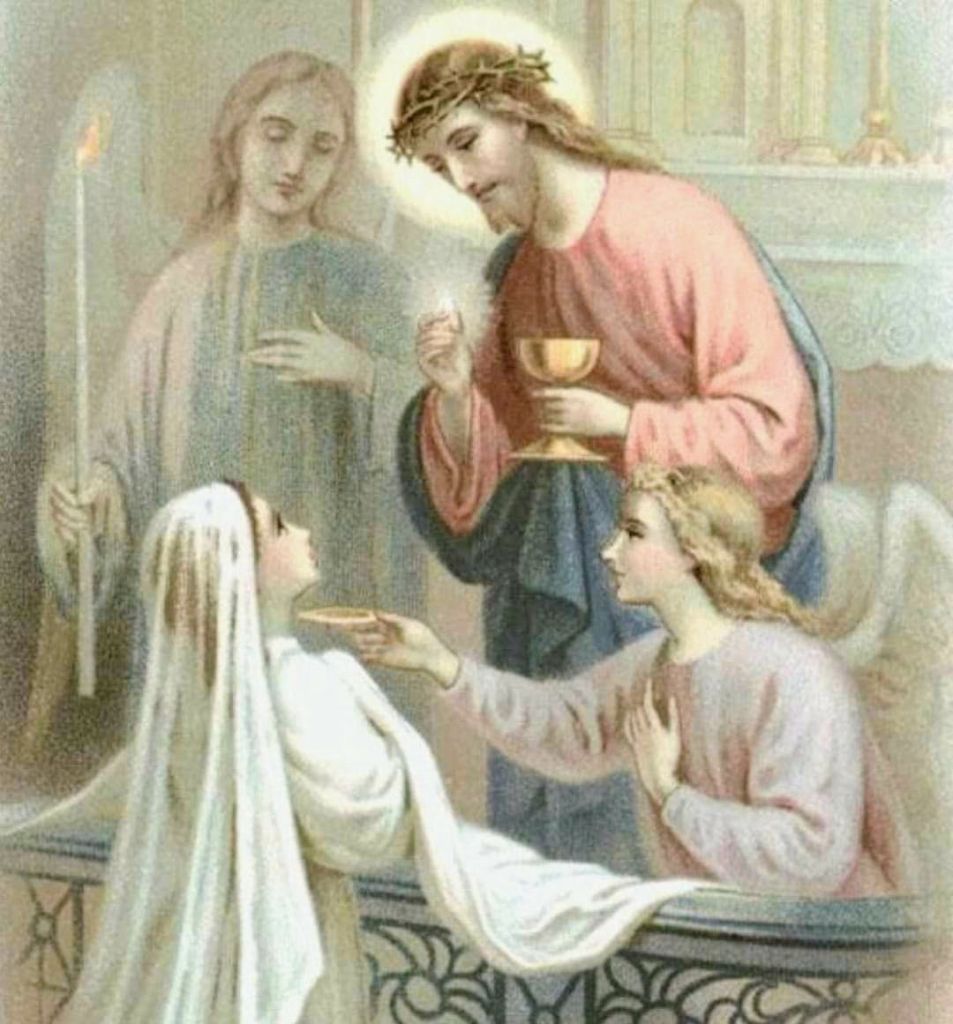
(Taken from a talk given by Fr. Mateo, SS.CC., apostle of the Sacred Heart of Jesus and founder of the Work of Enthronement, to a group of Eucharistic Sentinels making a holy hour at the Benedictine Sanctuary of Perpetual Adoration in Tucson, Arizona.)
Dear Friends – You are the friends of the King, so we are friends. Are you really zealous? Are you really apostles of the Sacred Heart in the Blessed Sacrament? Yes, I am preaching love; I am preaching the Lover, Jesus – a love of self-forgetting, a love spreading, a love conquering. You must be apostles! You love Him; you must be apostles, the ones to set fire to other hearts, to other baptized Catholics, that they may love the Master as you love Him. How many Catholics there are who have not grasped the duty of being apostles, the duty of gratitude! How many there are who are interested only in themselves, in their own spiritual welfare, and care nothing for that of others. No, it is our positive duty, our OBLIGATION, TO BRING OTHERS TO THE MASTER, to give Him not only our own souls but the souls of others.
Be grateful and be generous in giving of the treasure which Our Lord has entrusted to your care, lavishing these treasures on souls, on poor starving souls. It is sad that so few love Jesus. Therefore, make Him better known, better loved. In His name, I ask you: be apostles, in gratitude, in charity.
We preach charity toward the poor and unfortunate people. That is beautiful, splendid, and it must be done; and yet, what is material charity when compared to a soul? I refer to the conquering of even one soul, for there is nothing greater than that – to conquer souls redeemed by Our Lord, for whom He shed His Precious Blood. That is true gratitude, true charity. You must love each other, your neighbors; then give them Jesus, give them Jesus! Give Jesus to those straying far from Him; a duty of charity concerning souls, a duty of gratitude toward Jesus, your Benefactor, Who has chosen you as His friends, Who has overwhelmed you with graces; then give what you have received.
PAY THE RANSOM WITH THE CHALICE
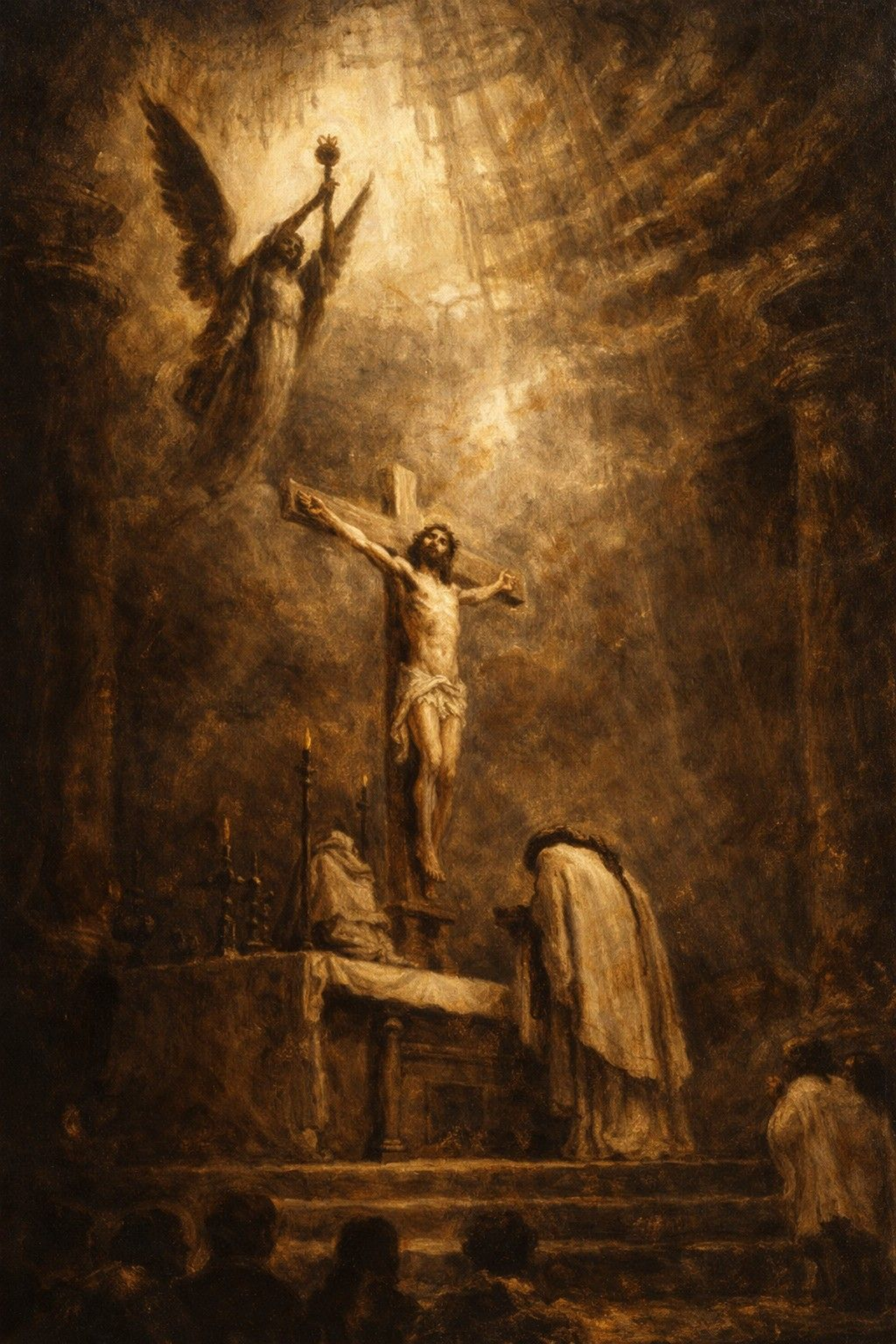
But that is not sufficient. Fervent Sentinels, trusting in your generosity, I go farther. Do you know what I am preaching everywhere? I am preaching: Pay the ransom of souls with the Chalice, with the Chalice. The greatest means of converting souls is one more Mass, one more mass during the week, and, with sacrifice, two or three more Masses; if possible, daily Mass, to pay for the eternal salvation of souls so dear to you. That is the great thing – the Chalice filled with the Precious Blood. You will never see souls go astray if you pay the ransom, hearing one more Mass, two, three, four, and, if possible, daily Mass, with sacrifice; then, you are apostles, paying the ransom for the Sacred Heart.
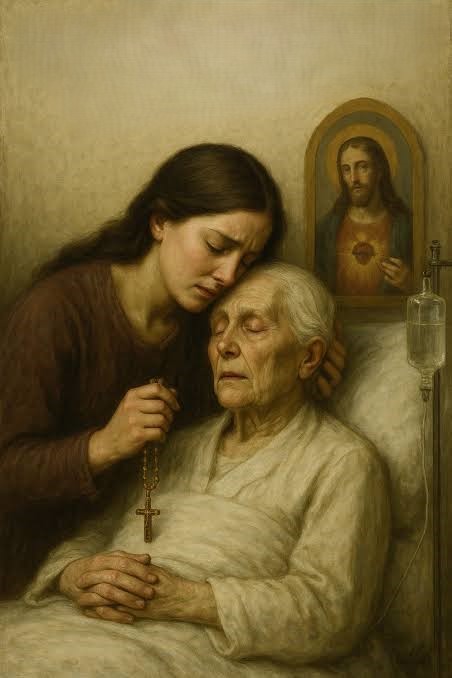
I remember long years ago, a lady – she had her own unconverted mother, and that old lady was dying. Nothing, nothing to be done. Her daughter, a wonderful Catholic, said to her: “Mother, you are baptized; you are supposed to be a Catholic.” But the mother would not listen. “Nonsense! Allow me to die as I have lived. I do not need God; I am 78 years old!” The daughter came to me, asking what should be done. I said to her: “Pay the ransom; you are Catholic. Go to Mass, daily Mass.” She was wonderfully faithful. She was not at all healthy, the church was at a distance, yet she never missed one Mass.
It seemed fruitless. She said to her mother one day: “Mother, please, you are dying. Shall I not call a priest?” “No! No!” Then, the daughter brought a picture of the Sacred Heart which she held up for her mother to see. “Here, Mother, let Him come to you in Holy Communion. I have prayed and gone to Mass daily in order that you may not die without making your peace with Jesus, Who has loved you so much. The Chalice has been offered every day for you, that your soul may be washed in the Precious Blood.” So the daughter pleaded until, finally, the mother turned to her and said: “I do not know how, but I have changed completely. A priest – oh, get me a priest at once!” And the mother died praising the Sacred Heart of Jesus.
Then the husband, a man living with hate in his heart toward God – an actual apostle of Satan – also asked for a priest, for he was sick, very sick. He asked for Father Mateo. I heard his confession four times, and he received Holy Communion as often. He called in fifteen or twenty of his former friends, also living in hate, and said to them: “Kneel down and adore Christ the King, the King of Love. That is the only thing worth while.” He died praising the Sacred Heart. The the third one in the same family, gone astray – the youngest brother, twenty-five years old – also returned to the sacraments. And why? The Mass, daily Mass, the Chalice, the greatest power of redemption.
ONE MORE MASS! A NOVENA OF MASSES!
How often have I heard young ladies say to me: “Father, we are making novena after novena for certain conversions, but to no avail.” Do you know what I reply? I do not blame that; that is all right; but instead of annoying the saints with novena after novena, why do you not make a novena of Masses? That is the GREAT novena. And all the saints will applaud you, for they realize the greatness of Holy Mass. I do not blame your novenas to the saints, but I say transform your novenas into something divine, omnipotent – the Chalice – one more Mass – two, three or four Masses – if possible, daily Mass. You are asking for a miracle; I approve. But I tell you that you must pay the ransom for the conversions you make. You have a right to ask for such miracles. Do you know what a conversion is? It is the resurrection of a soul. It is far greater than to see the resurrection of a corpse. Oh, one more Mass! Please – one more Mass! Pay the ransom with the Chalice. One more Mass! If you have anyone at home, sick or dying, oh, pay the ransom with the Chalice – one more Mass!
SILENT PREACHING OF A SAINTLY MOTHER
May I relate to you something personal, with real emotion? I am the son of a Protestant. My father was an Anglican. One of my uncles was a missionary in India, the other a Canon in Westminster Abbey in London for thirty years. Yet I have seen my father, 58 years old, kneeling for his first confession and first Communion, weeping out of joy, the great Anglican, overpowered by grace. Who converted him? The grace of God. But who was the instrument? A great preacher? Yes – that preacher was my mother. How did she succeed? Speaking generally, you know that husbands do not like sermons at home. Then how did she convert my father? She never missed Mass, her daily Mass, except when sick and dying, and even then the priest came to give her Holy Communion.
When I left home for school in the morning, she was already back from the church – and we were eleven children. She knew her first duty was to the home, to attend to her family; and yet, in spite of that, she found time to go every morning to Holy Mass and to receive Holy Communion. She paid the ransom. Our Lord was obliged to grant her the favor, for He is justice as well as truth. I venerate my mother. She died in 1935, when I was preaching in Japan. She is saying, as I am saying, that it is the Chalice, the Chalice, the Chalice!
A saintly soul said one day to Our Lord Who appeared to her: “O Lord, what could I offer to Thee for Thy glory, for my sanctification, and for the salvation of many, many souls?” And Our Lord replied: “For My Father, for yourself and for souls, give Me one more Mass!” Where there is a will, there is a way; where there is love, there is a way. When you love Him, come! Come! Come! With sacrifice, prove your love by giving Him one, two, three Masses during the week; if possible, daily Mass. If you make the effort, you will be blessed a thousand times, and you will praise Him one day.
LITTLE MISSIONARIES
I remember preaching in Scotland when it was very cold. The pastor asked me to speak to a large number of little ones who were six, seven, eight and nine years old and about to make their first Communion. I said to them: “Tell Mama that I am preaching the reign of the Sacred Heart – that you are going to become missionaries.” After I had finished speaking to the children, one little girl came to me and said: “My daddy never goes to Church; he never goes to church. I am going to say to Mama what you have said, and I am never going to miss one Mass.” You see, I had preached the Sacred Heart and asked them to help me save souls with one more Mass. The child told her mother she was going to attend daily Mass for her father. The mother thought it was too cold, but the child insisted she must save her father’s soul. So the mother at length consented to allow her to attend daily Mass. Three months later, I met this child, and she said to me: “Father, do you remember what I told you about my daddy not going to church? Well, I have never missed one Mass since then. It has been cold, and I am often sleepy, for it is early. And do you know what I say to Jesus when I have Him here (in her heart)? I tell Him I am going to Mass and Communion every morning. It is for my daddy, for my daddy. I am paying the ransom. I am taking his place here every morning, so that You may save his soul, here at the altar rail, my loving Jesus.” Wonderful!
When the precious moment of Consecration has arrived, imagine yourself on Calvary, standing beneath the Cross with Mary and, united with her sentiments, offer to the Eternal Father the Precious Blood and Wounds of Jesus for the conversion of sinners, unbelievers, and the poor souls in Purgatory. And now, united with Jesus and Mary, look at your Crucifix and make your offering by saying: “Eternal Father, I offer Thee the Wounds of Our Lord Jesus Christ to heal those of our souls. My Jesus, pardon and mercy through the merits of Thy Sacred Wounds. Renew this offering for every Wound of Jesus. You will also have time to see Him in spirit, in pain and suffering, in the first, second, and third fall under the heavy weight of the Cross. Do not forget the adorable Face of Jesus, the seat of all wisdom, crowned for us with thorns. God promised a great reward for those who honor His holy Face. In this offering, we are offering heaven to heaven. This is not all; we are following the Master, the Good Shepherd and the Good Samaritan, to heal the wounds of our Savior Who has loved us so much.
Let us trust Jesus in our temporal needs and especially in our spiritual needs. When saying in the “Our Father,” give us this day our daily bread (the Holy Eucharist), let us be mindful to plead for our neighbor, the lukewarm, and ourselves.
Never miss Mass through your own fault. Sometimes, you cannot attend; but make the effort never to miss one Mass and Communion, in spite of difficulties. You will bless me when dying if you do this. May God grant you the grace to attend Mass daily and to receive daily Communion with the intention of saving souls from hell and, thereby, glorifying God in heaven for all eternity. There is no greater love.
(Reprint from SOUL Magazine – Imprimatur: Most Rev. Geo. W. Ahr, S.T.D., Bishop of Trenton)
Perhaps the greatest treasure of the Franciscan Order is the stigmata of our Holy Father, St. Francis. He was the first saint to receive the wounds of Christ. The manner in which he received them and the significance of their reception remind us of what we strive for during the holy season of Lent.
The Cross and Our Crucified Lord were the objects dearest in the heart of St. Francis. As Johannes Jorgensen writes: “It was the voice of the Cross that in San Damiano’s lonely church in 1207 had converted him from the world to follow Christ in naked poverty. ‘From that hour,’ says the Three Brothers’ Legend, ‘his heart was so sore and melted with the memory of Christ’s sufferings, that all his life he bore the wounds of the Lord Jesus in his heart.’” – (JJ)
St. Francis Receives the Stigmata
St. Francis left for Mt. La Verna in August of 1224. He wished to celebrate the Assumption of the Blessed Virgin Mary there and then prepare himself by a forty days’ fast for the feast of St. Michael (September 29), to whom St. Francis had a great devotion. While there, St. Francis reminded the brothers with him how they were to live. Jorgensen writes: “And after many beautiful and pious words about this thing [the virtue of poverty], he concluded, saying: ‘This is the way of life I lay upon you and myself. For as I see that my death approaches, I wish to be alone with God and lament my sins. And Brother Leo can bring me a little bread and a little water, as seems fit to him, but if anyone comes, answer for me, and let no one come to me!’” – (JJ)
During this time, St. Francis became sad and disquieted with thoughts of the future. “In vain did Francis issue his Ideal Image of what a perfect Friar Minor, a perfect Provincial Minister, a perfect General of the Order, should be — he knew well that the facts were widely different. Brother Elias and others of his mind were not, as Francis would have it, satisfied with ‘a book and an ink-horn and one pen and a signet,’ — they collected books and studied church law, and it was only waste of time to exhort them to act towards their Brothers in the spirit not in the letter of the law.” This caused him tremendous suffering. “They had taken his Brothers, his sons, from him, and whither were they taking them now? They were going where Francis did not wish them to go, and he had to look on without power.” – (JJ)
In order to obtain help, St. Francis asked Br. Leo to open the Gospels three times, and each time he opened to the Passion of Christ. By this, St. Francis understood he was to suffer and resign himself to the will of God. He spent his days contemplating the Cross and the unsurpassed suffering and love of Christ. With this subject in mind, “Francis lay in prayer outside his cell on the morning of the fourteenth of September. It was not yet day, but while awaiting the sunrise he prayed, with face turned to the east, with hands upraised and extended arms:
“O Lord Jesus Christ, two favors I beg of thee before I die. The first is, that I may, as far as it is possible, feel in my soul and in my body the suffering which thou, O gentle Jesus, sustained in thy bitter passion. And the second favor is, that I, as far as it is possible, may receive into my heart that excessive charity by which thou, the Son of God, wast inflamed, and which actuated thee willingly to suffer so much for us sinners.”
(JJ)
“And as he long prayed thus,” say the Three Brothers, “he felt a certainty that God would vouchsafe him these two things, and that it would be given him to receive both parts, so far as it was possible for a creature… and the glow of piety grew so strong in him, that with charity and pity he was all transformed to Jesus.” – (JJ)
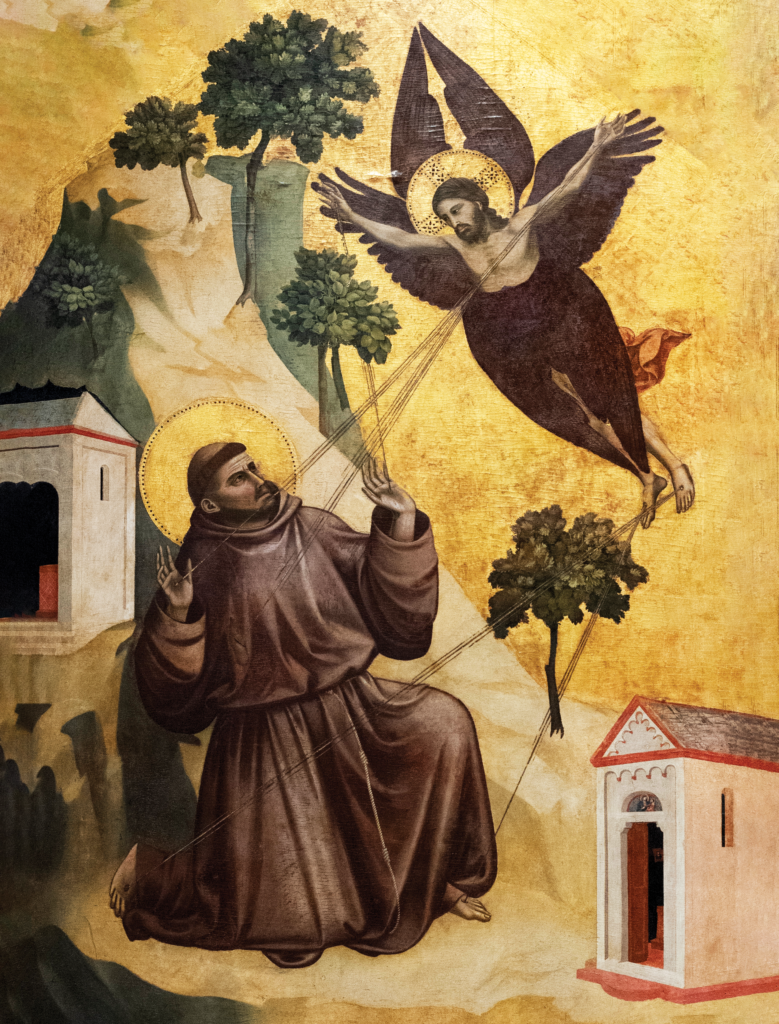
Jorgensen concludes: “And as he lay in this prayer… behold, it came to pass that he… saw a seraph coming down from heaven with six luminous wings. And the seraph slowly approached Francis, so that he could discern and clearly see that it bore an image of a crucified man, and its wings were so placed that two were raised over the head, two were extended for flight, and with two it covered its body.” – (JJ)
“But when Francis saw this vision he was much frightened, and at the same time he was filled with joy and sorrow and wonder. For he had great joy in the gentle Jesus who showed Himself to him so intimately and looked so lovingly upon him, but it gave him inexpressible sorrow to see the Lord fastened to the Cross. And, moreover, he wondered over so unusual and astonishing a vision, for he knew that mortal suffering is not compatible with a seraph’s immortal spirit. But as he wondered thus, it was revealed to him by the one before him that this vision by a special provision of God was granted him that he should understand that it was not by bodily martyrdom, but through an inner flame, that he should be transformed entirely into the likeness of Christ the Crucified.” After the vision had disappeared, “an excessive glow was left in Francis’ heart, and a living love of God, and in his body the vision left a wonderful image and imprint of Christ’s sufferings.” – (JJ)
The Significance of the Stigmata of St. Francis
4 things were significant about the stigmata of St. Francis:
It was God’s seal on the Order of St. Francis
It showed St. Francis’ perfect conformity to Christ
It was the renewal of the Passion of Christ
It served and serves as a reminder for all
God’s Seal
By bestowing upon St. Francis His Sacred Wounds, Our Lord Jesus Christ showed his approval of St. Francis’s way of life. It was Christ Himself who wrote the Rule of the Friars Minor, as Br. Leo related: “And then all heard the voice of Christ in the air, which said: ‘Francis, there is nothing in the Rule of thine, but it is all Mine…” – (JJ Bk. 3 Ch. 11)
St. Francis’ Conformity to Christ
“After the said seraphic apparition, Christ, who then appeared to him, spoke to St Francis certain high and secret things which he would not reveal during his lifetime to anyone ; but after his life was ended he revealed them, as will be shown further on ; and these were his words : ” Knowest thou what I have done unto thee? I have given thee the stigmas which are the signs of My Passion, because thou shalt be My ambassador. And even as I on the day of My death descended into Limbo and delivered all the souls I found there, by virtue of My wounds, so also do I grant to thee that every year on the anniversary of thy death thou shalt go to purgatory, and all the souls thou shalt find there of thy three orders, namely of the Friars Minor, of the sisters and virgins, and of the others also who shall have remained sincerely devoted to thee, thou shalt deliver by virtue of these thy stigmas, and shalt lead them into the glories of paradise, that so thou mayest be conformed to Me in thy death as thou hast been in thy life.” – (F); The Third Consideration of the Holy Stigmas
Renewal of the Passion
“And after some days, as St Francis was standing by his cell considering the conformation of the mountain and marveling at the immense fissures and apertures in the great rocks, it was revealed to him by God while he prayed that these mighty chasms had been miraculously opened in the hour of the Passion of our Lord when, as the evangelist relates, the rocks were rent asunder. And it was the will of God that this should more particularly take place in this mountain of Alvernia, because the Passion of our Lord Jesus Christ should there be renewed in the soul of St Francis by loving compassion, and in his body by the sacred stigmas.” – (F); The Second Consideration of the Holy Stigmas
A Reminder for All
The holy stigmata is a reminder to us, as it was a reminder to the people of Assisi, the reality of the suffering and charity of Our Lord, Jesus Christ.
“But for all his pains to hide the sacred mystery of the holy stigmas in order to fly the occasion of earthly glory, it pleased God, for His own glory, to show forth many miracles by virtue of them;… both during his life and after his glorious death, in order that by these clear and evident miracles the hidden and marvelous virtue of the most holy stigmas, and the excessive charity and mercy of Christ so wonderfully shown in his regard might be manifested to the world.” – (F); The Fourth Consideration of the Holy Stigmata
Miracles of the Stigmata
There are numerous miracles in virtue of the holy stigmata of St. Francis, many of which can be found in the Fioretti. We will only describe two here.
Warming a Freezing Peasant
While traveling from Alvernia to Our Lady of the Angels with Br. Leo and a pious peasant who lent his donkey for St. Francis to ride, the weather became so terrible they were unable to reach their destination before nightfall. They were obliged by the dark and a snowstorm to find shelter in a hollow cave. They had no means to make a fire, and the poor peasant could not sleep from the cold.
He started to complain bitterly and to murmur against St. Francis who brought him there. St. Francis perceived this and, in his fervent charity, extended his hand, touching the peasant’s own. At once it was seared with seraphic fire, the cold was driven away, and the man experienced such warmth in front of him and behind him that it seemed he was in a furnace. He was comforted in body and soul and stated the next morning that he slept more sweetly in the rocks and snow than he ever did in his own bed.
A Vision of a Dead Brother Released from Purgatory
It happened once that a devout Brother heard that another Brother, and his companion, had died during the night. He prayed in the choir until midday with fervor and tears when suddenly there was a great noise. He saw St. Francis and other brothers standing at the entrance of the choir. He then saw Our Lord with a multitude of saints walking around the choir. Finally, he saw in the cloisters the soul of his companion in flames.
St. Francis knelt and implored Our Lord Jesus Christ twice to release the soul of the Brother from purgatory in virtue of His Incarnation and Death on the Cross, but Christ continued to walk as if He did not hear. Finally, St. Francis knelt a third time and showed Christ the stigmata saying, “I pray Thee, most compassionate Father and Lord, by the great pains and great consolation which I sustained when Thou didst impress these stigmas on my flesh, that Thou wouldst have mercy on the soul of my brother that is in this fire of purgatory.”
At once Our Lord stood still beside St. Francis and said: “Francis, to thee I concede the soul of thy brother.” And by this He certainly wished to honour and confirm the glorious stigmas of St Francis…
References
The Biography of St. Francis written by Johannes Jorgensen, Bk 4 Ch 4 (JJ),
The Legend of the Three Brothers (L), which was referenced by Jorgensen
“A Son of the Immaculate Heart of Mary is a man on fire with love, who spreads its flames wherever he goes. He desires mightily and strives by all means possible to set the whole world on fire with God’s love. Nothing daunts him; he delights in privations, welcomes work, embraces sacrifices, smiles at slander, and rejoices in suffering. His only concern is how he can best follow Jesus Christ and imitate Him in working, suffering, and striving constantly and single-mindedly for the greater glory of God and the salvation of souls.”
St. Anthony Mary Claret (Autobiography of St. Anthony Mary Claret)
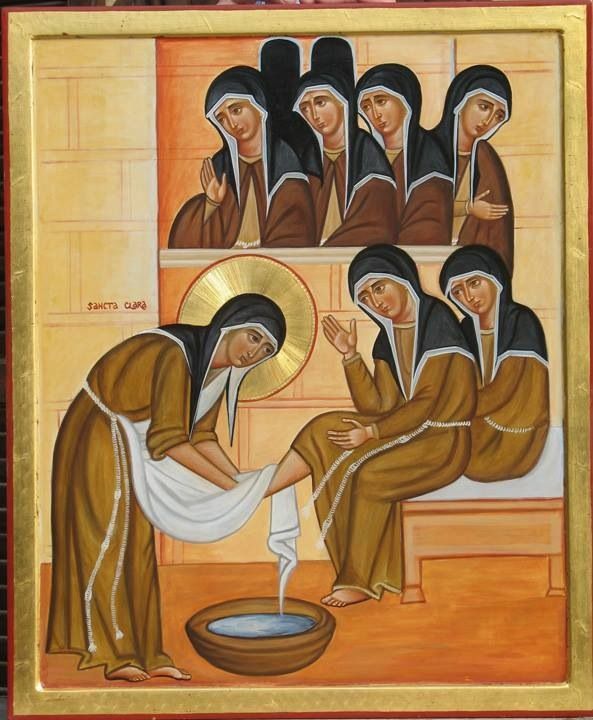
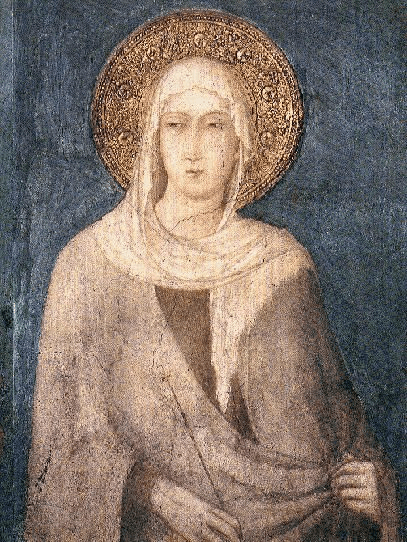
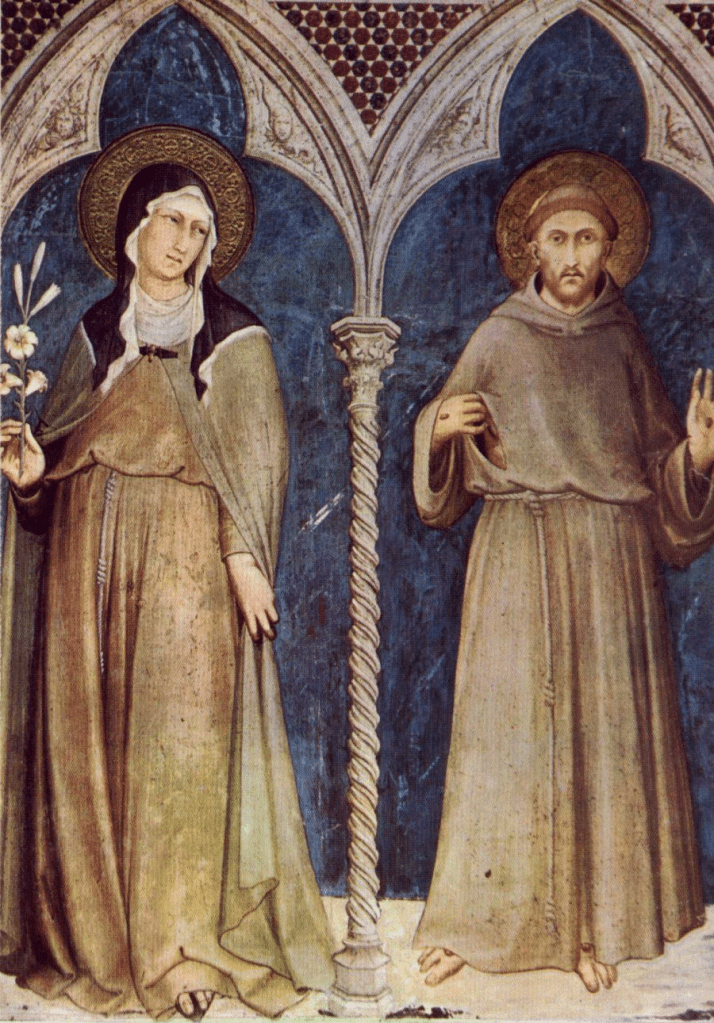
At the beginning of the thirteenth century when luxury and sensuality held sway, St. Francis of Assisi made his appearance, giving to men the example of a poor and penitential life. But God wished also to give the vain and pleasure-loving women of that period an example of contempt of the world’s vanities. For this mission He chose Clare, the daughter of a prominent and noble family of Assisi, born on January 20, 1194. Her father was favarone de Offreduccio, count of Sassorosso; her mother, the servant of God Ortolana, who died in the odor of sanctity. [1] St. Francis inaugurated his work, as Dominic had done, by preparing a dwelling for his future daughters, whose sacrifice might obtain every grace for the great Order he was about to found. [2]
Before the child’s birth it was revealed to the mother that her offspring would be a brilliant light in the world. This light the mother detected in her daughter from her earliest years. Besides being favored with personal beauty, Clare possessed a charming personality and rare qualities of mind. She was a favorite in the family, and hardly had she attained to young womanhood, when several suitors sought for her hand in marriage.
But her virtues surpassed the gifts with which nature endowed her. She interested herself in the poor and frequently denied herself things so as to be able to give more to the poor members of Christ. She loved prayer, and it was her sweetest delight to surrender her heart to sentiments of ardent devotion before Jesus Christ in the Blessed Sacrament. Beneath her beautiful garments she wore a sharp penitential belt in order to honor the sufferings of Christ and to preserve herself a chaste virgin for His sake.
She was eighteen years old when she heard St. Francis preach in the Cathedral of Assisi during the Lent of 1212. His words on contempt of the world and on penance, and particularly the holy example he set earnestly affected Clare, that she conferred with him and soon recognized that God was calling her to lead a life similar to his in the seclusion of the convent. She did not hesitate to carry out God’s plans. Realizing that her family, intent only on a brilliant future for her in the world, would oppose her vocation in every way, she had to leave home in secret.
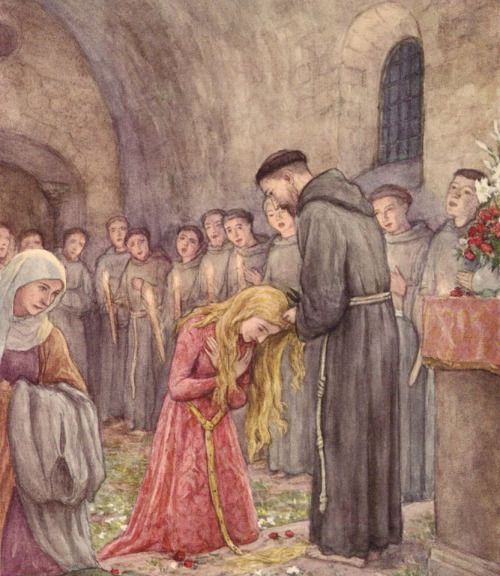
On Palm Sunday she went to church, dressed in her richest garments, to attend divine services. That night, attended by an elderly relative, she went to the little chapel of St. Mary of the Angels, Where St. Francis and his brethren came to meet her with lighted candles in their hands. Before the altar she removed her beautiful headdress, then St. Francis cut off her hair and covered her head with a veil of common linen. In place of rich garments, she received a coarse penitential garb and was girded with a white cord. This was the way in which the mother and founder of the Poor Clares was invested on March 18, 1212. For the time being, St. Francis placed her in a convent of Benedictine Sisters.
When Clare had successfully overcome the great opposition of her family, who had intended to force her to return home, her sister Agnes joined her in her sacrifice. St. Francis arranged a little convent for them near the church of St. Damian. There the number of consecrated virgins soon increased. They served God in great poverty, strict penance, and complete seclusion from the world according to a rule which St. Francis gave them as his Second Order. Clare was obliged under obedience to accept the office of abbess in 1215 and to continue in it for thirty-eight years until her death. But her love for humility found compensation in the performance of the lowliest services toward her sisters. In spite of her great physical sufferings, she set her sisters a striking example of zeal in penance and prayer. [3]
Clare was to Francis the help like unto himself, who begot to the Lord that multitude of heroic virgins and illustrious penitents soon reckoned by the Order in all lands, coming from the humblest condition and from the steps of the throne. In the new chivalry of Christ, Poverty, the chosen Lady of St. Francis, was to be the queen also of her whom God had given him as a rival and a daughter. Following to the utmost limits the Man-God humbled and stripped of all things for us, she nevertheless felt that she and her sisters were already queens in the kingdom of heaven: (Regula Damianitarum, viii); In the little nest of poverty,” she used to say, “what jewel could the bride esteem so much as conformity with a God possessing nothing, become a little One whom the poorest of mothers wrapped in humble swathing bands and laid in a narrow crib?” And she bravely defended against the highest authorities the privilege of absolute poverty, which the great Pope Innocent III feared to grant. Its definitive confirmation, obtained two days before the Saint’s death, came as the long-desired reward of forty years of prayer and suffering for the Church of God… For forty-two years she ruled her monastery with wonderful care and prudence, in the fear of God and the full observance of the Rule. Her own life was a lesson and an example to others, showing all how to live aright.
She subdued her body in order to grow strong in spirit. Her bed was the bare ground, or, at times, a few twigs, and for a pillow she used a piece of hard wood. Her dress consisted of a single tunic and a mantle of poor coarse stuff; and she often wore a rough hair-shirt next to her skin. So great was her abstinence, that for a long time she took absolutely no bodily nourishment for three days of the week, and on the remaining days restricted herself to so small a quantity of food, that the other religious wondered how she was able to live. Before her health gave way, it was her custom to keep two Lents in the year, fasting on bread and water. Moreover, she devoted herself to watching and prayer, and in these exercises especially she would spend whole days and nights. She suffered from frequent and long illnesses; but when she was unable to leave her bed in order to work, she would make her sisters raise and prop her up in a sitting position, so that she could work with her hands, and thus not be idle even in sickness.
The greatness of her sanctity was manifested by many different miracles. She restored the power of speech to one of the sisters of her monastery, to another the power of hearing. She healed one of a fever, one of dropsy, one of an ulcer, and many others of various maladies. She cured of insanity a brothers of the Order of Friars Minor. Once when all the oil in the monastery was spent, Clare took a vessel and washed it, and it was found filled with oil by the loving kindness of God. She multiplied half a loaf so that it sufficed for fifty sisters. [4]
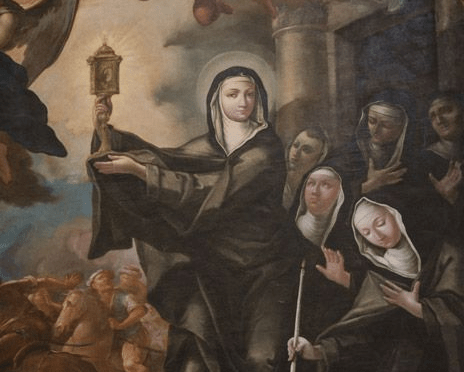
In the year 1240 an army of Saracens who were in the service of the excommunicated Emperor Frederick II drew near Assisi. They rushed upon the little convent of St. Damian that lay outside the city and had already scaled the walls of the monastery. In mortal fear the sisters had recourse to their mother, who was ill in bed.
The saint, carrying the pyx containing the Most Blessed Sacrament had herself carried to a convent window. There she pleaded fervently with the Lord of heaven in the words of the Psalmist (Ps. 73:19), “Deliver not up to beasts the souls, that confess to Thee, and shield thy servants whom thou hast redeemed with Thy precious blood.” A mysterious voice coming from the host said: “I shall always watch over you.” Immediately panic seized the besiegers. A ray of brilliant light which emanated from the Blessed Sacrament had dazzled them. They fell down from the walls and fled from the place. The convent was saved and the town of Assisi was spared. [5]
From the ancients of Israel, there came to this virgin, not yet thirty years old, such messages as this: “To his very dear Sister in Jesus Christ, to his mother the Lady Clare, handmaid of Christ, Hugolin of Ostia, unworthy bishop and sinner. Ever since the hour when I had to deprive myself of your holy conversation, to snatch myself from that heavenly joy, such bitterness of heart causes my tears to flow, that if I did not find at the feet of Jesus the consolation which his love never refuses, my mind would fail and my soul would melt away. Where is the glorious joy of that Easter spent in your company and that of the other handmaids of Christ? … I knew that I was a sinner; but at the remembrance of your supereminent virtue, my misery overpowers me, and I believe myself unworthy ever to enjoy again that conversation of the Saints, unless your tears and prayers obtain pardon for my sins. I put my soul, then, into your hands; to you I entrust my mind, that you may answer for me on the day of judgment. The Lord Pope will soon be going to Assisi; Oh! that I may accompany him, and see you once more! Salute my sister Agnes (i.e. St. Clare’s own sister and first daughter in God); salute all your sisters in Christ.”
The great Cardinal Hugolin, though more than eighty years of age, became soon after Gregory IX. During his fourteen years’ pontificate, which was one of the most brilliant as well as most laborious of the thirteenth century, he was always soliciting Clare’s interest in the perils of the Church, and the immense cares which threatened to crush his weakness. For, says the contemporaneous historian of our Saint, Luke Wadding: “He knew very well what love can do, and that virgins have free access to the sacred court: for what could the King of heaven refuse to those, to whom he has given himself?” [6]
After suffering from a serious illness for thirty years, Clare felt that her end was drawing nigh [7]. Her daughters beheld wings of fire over her head and covering her shoulders, indicating that she to had reached seraphic perfection. On hearing that a loss which so concerned the whole Church was imminent, the Pope, Innocent IV, came from Perugia with the Cardinals of his suite. He imposed a last trial on the Saint’s humility, by commanding her to bless, in his presence, the bread which had been presented for the blessing of the sovereign Pontiff; heaven approved the invitation of the Pontiff and the obedience of the Saint, for no sooner had the virgin blessed the loaves than each was found to be marked with a cross [8]. After she had received the last sacraments, she and one of her sisters beheld the Queen of Virgins coming with a large escort to meet her, the spouse of Jesus Christ. On August 11, 1253, she entered into the joys of eternity, and on the following day her body was buried. Pope Alexander IV canonized her already in the year 1255. [9]
Sources
[1], [3], [5], [7], and [9] – Habig, Marion A. The Seraphic Order: A Traditional Franciscan Book of Saints. Mediatrix Press, 2020
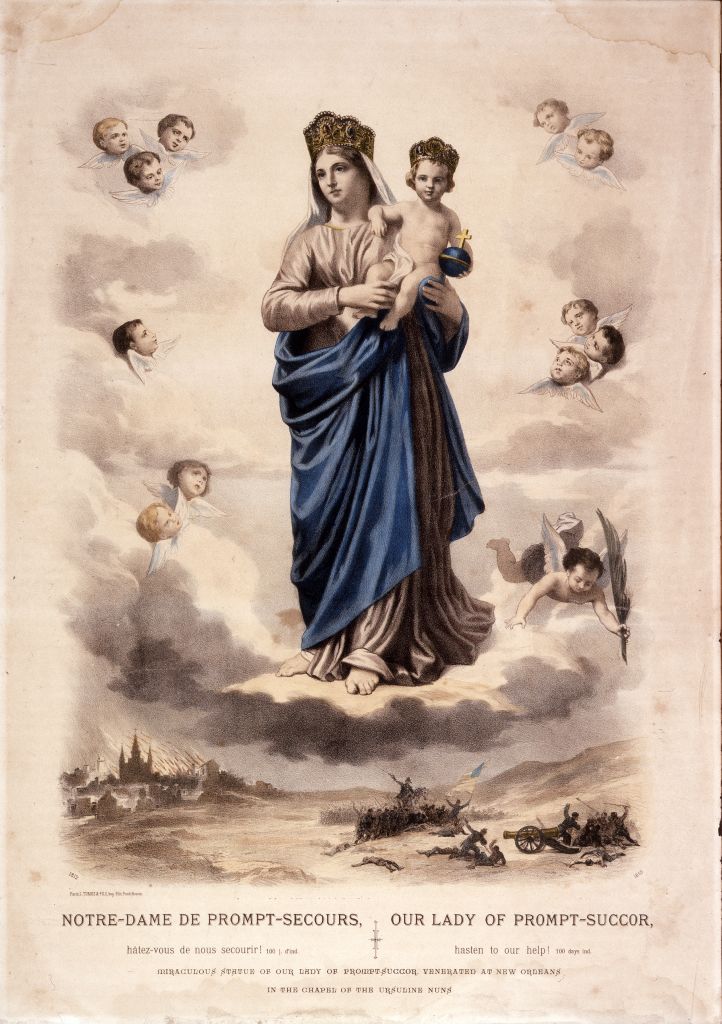
The title “Our Lady of Prompt Succor” was given to the Blessed Virgin Mary by Mother St. Michel Gensoul, an Ursuline Sister, in the late 18th century. When the reign of terror in France forced her into exile from her convent in Pont-Saint-Espirt to Montpellier, France, she founded a boarding school for girls. A letter from her cousin, an Ursline Sister in New Orleans, arrived, pleading for Mother St. Michel’s presence there. However, Bishop Fournier worried for the new and flourishing boarding school in troubled France and refused to grant her leave, telling her that only the Pope could give that permission.
In addition to the Bishop’s refusal, Pope Pius VII at this time (1809) was the prisoner of Napoleon Bonaparte in Savona, Italy, 295 miles away. The typical means of delivering a letter in peaceful times was by post riders on horseback, horsedrawn post coaches, or packet boats, and should the letter reach its destination at all, the Pope was under strict isolation and not permitted unmonitored communication. It seemed only a miracle could help Mother St. Michel.
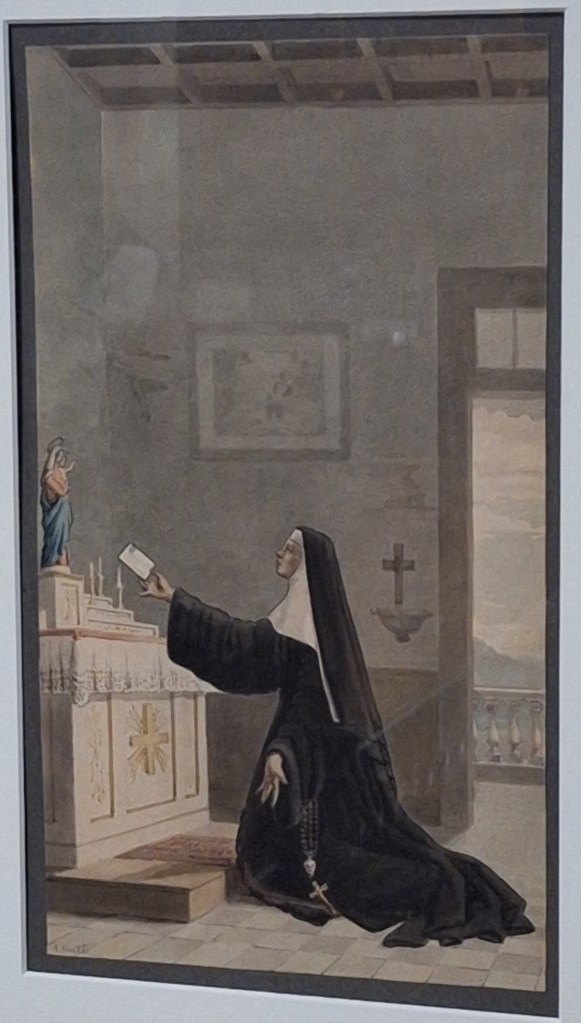
Undaunted, Mother St. Michel wrote a letter at once, but for three months she had no means to send it. She sought assistance from the Mediatrix of all graces, the Mother of God. Praying before her statue she said:
“O most holy Virgin Mary, if you obtain a prompt and favorable answer to my letter, I promise to have you honored in New Orleans under the title of Our Lady of Prompt Secours.”
In a few days, on March 18, 1809, she obtained a means to send the letter. Within a month, against all odds, the Pope’s reply came, granting his permission and praising and blessing her endeavor.
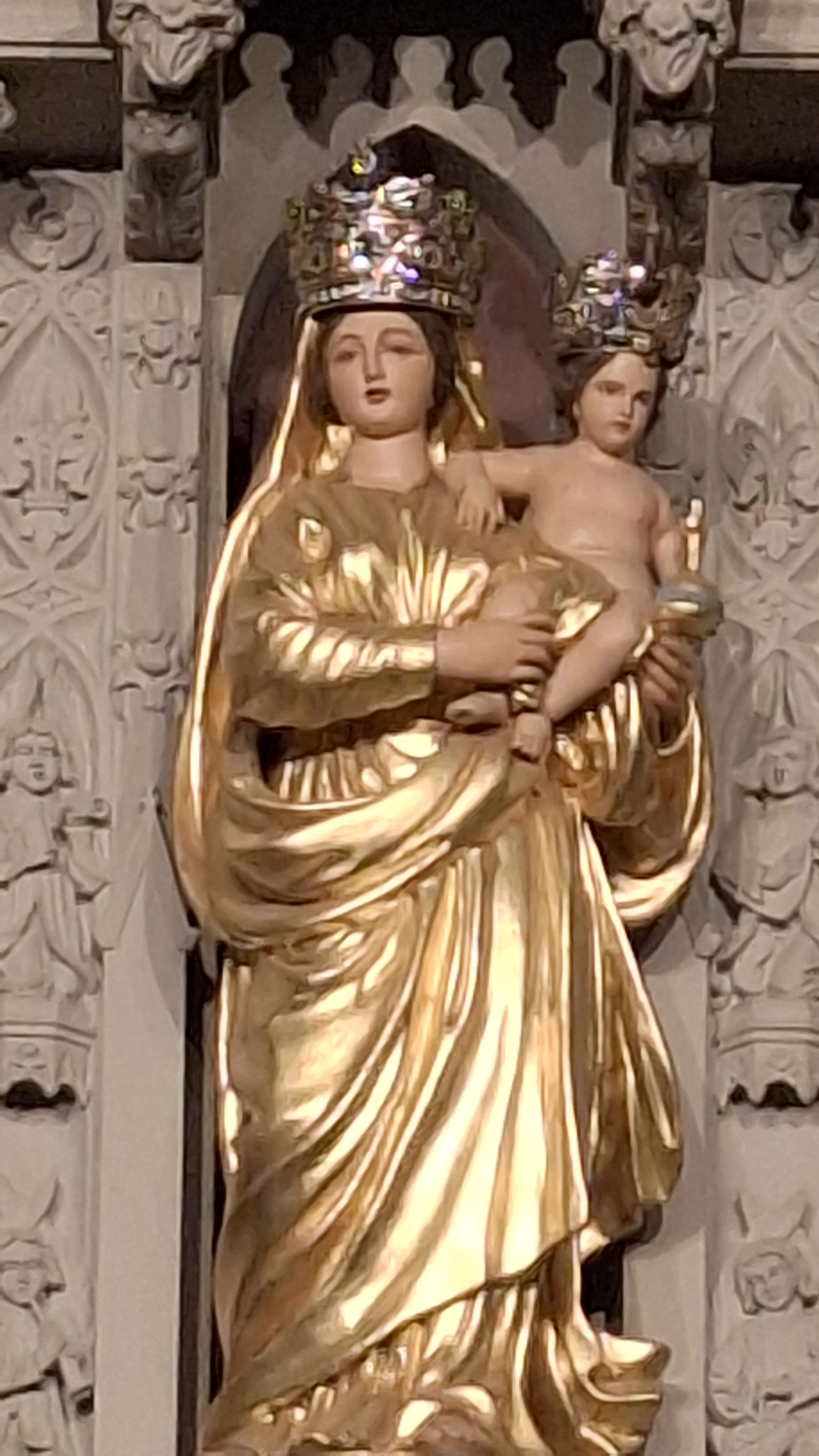
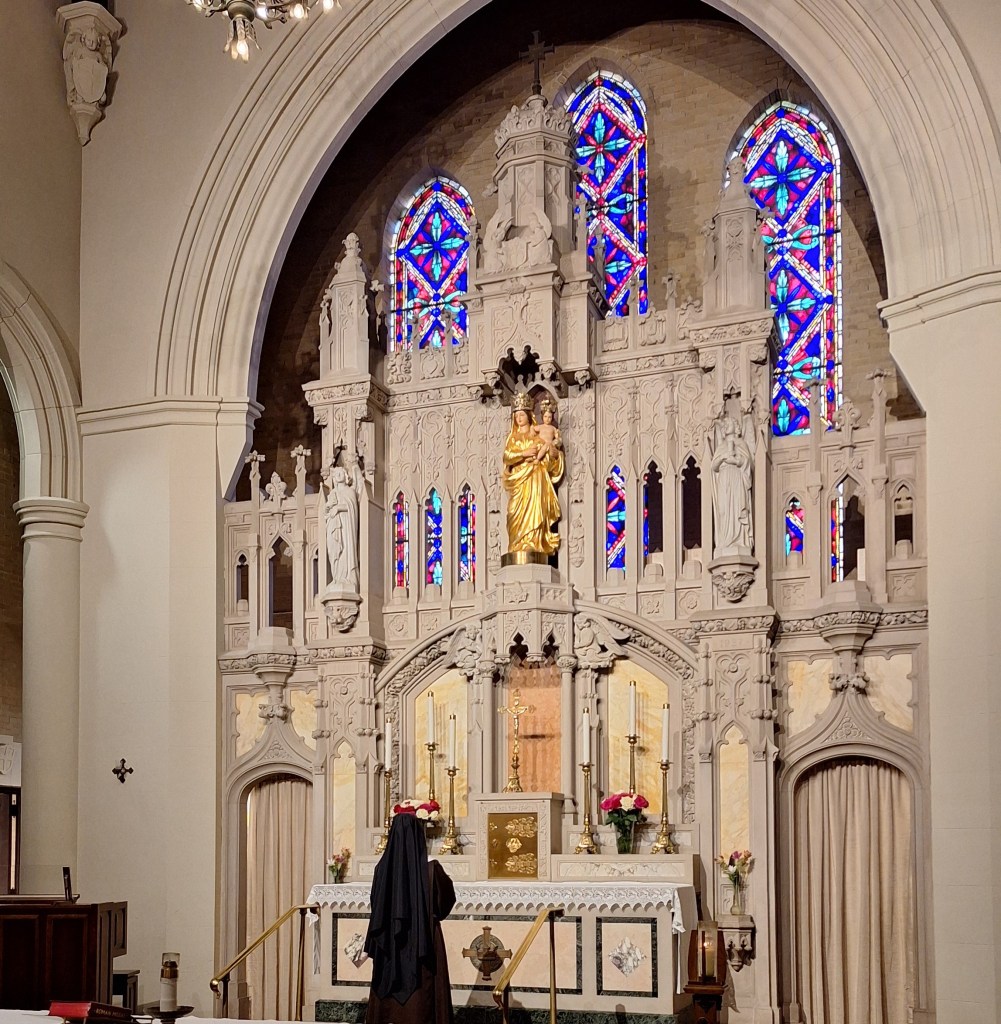
Mother St. Michel Gensoul set to work to fulfill her promise, having a wooden statue of Our Lady carved and painted gold, holding the infant Jesus. The Bishop blessed the statue and Mother St. Michel and several postulants left France for New Orleans. They arrived at the Ursuline Convent and enshrined the Statue on December 31, 1810.
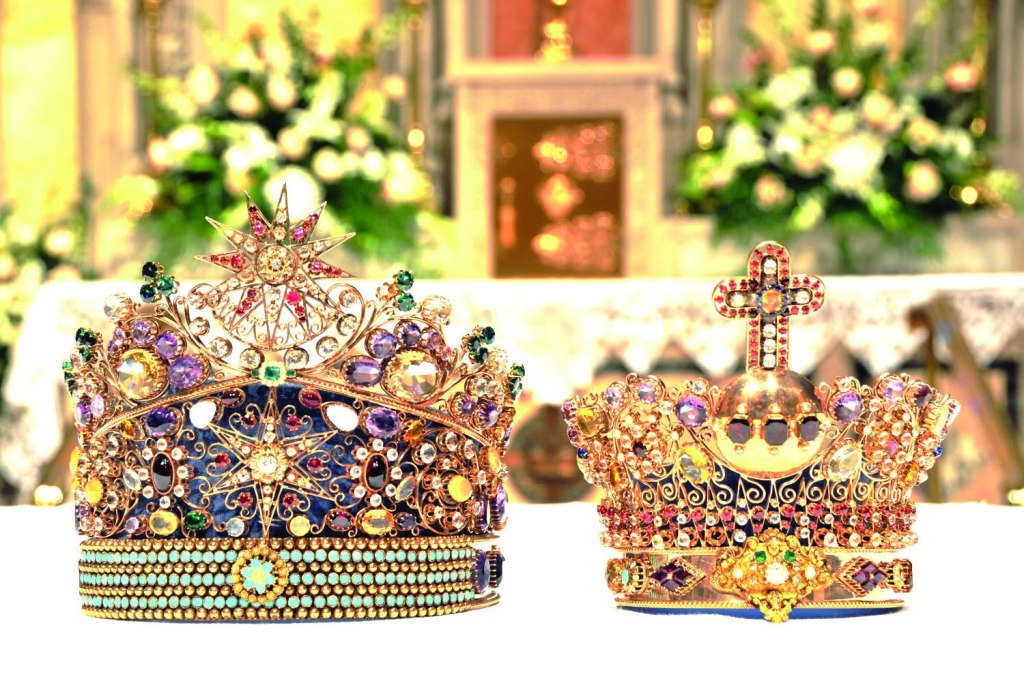
In 1894, Pope Leo XIII ordered a solemn coronization be given. In order for two crowns to be made for Our Lady and the Infant Jesus, the men and women of New Orleans gave, of their own free will, jeweled earings, bracelets, brooches, necklaces, bracelets, cuff links, and even tie pins. When the crowns were finished, every church of the Archdiocese of New Orleans made a solemn novena to prepare for the ceremony.
Archbishop Francis Janssens formally crowned the statue November 10, 1895, with a large assembly of clergy and faithful attending. In the end, every church bell in the Archdiocese rang with joy. Today, Our Lord and Our Lady have two crowns: the gold one is worn all year round, but the crowns made by the donated jewels are placed on the statue once a year, January 8th, the feast day of Our Lady of Prompt Succor.
Miracle Against the Fire of 1812
It was not long after the Sisters’ arrival that the Blessed Virgin Mary would continue to show how quick and powerful her aid is.
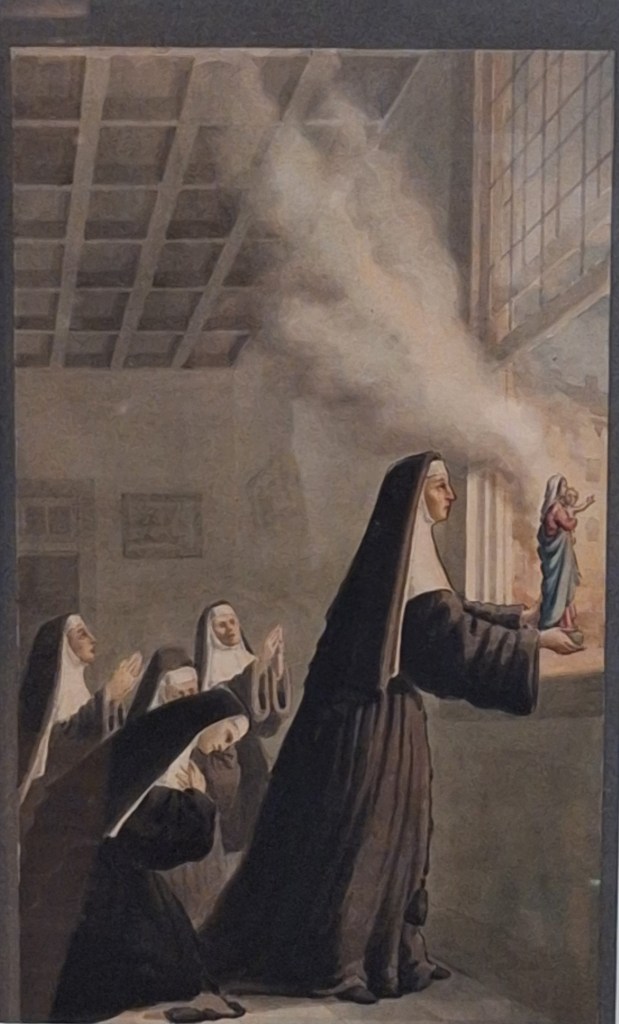
In 1812, a raging fire broke out in the city, quickly burning away a great part of what would eventually be called “The French Quarter,” and threatening to destroy the Ursuline Convent. Mother St. Michel urged the Sisters to flee the convent. One of the Sisters would write her eyewitness account:
“Hastily the Superior, Reverend Mother Saint Michel, commanded the nuns and school children to leave the building. As she herself turned to go, she was horrified to see Sister Saint Anthony, one of the old nuns, climbing the stairs. Following her, Rev. Mother discovered she was carrying a small statue of Our Lady. As the Superior watched, Sister Saint Anthony hurried to the window on the second floor. She set the statue on the sill facing the fire, then knelt and prayed with great confidence: ‘Oh Lady of Prompt Succor, save us or we are lost!’ At that very instant, the wind veered and the flames were blown back over their path of destruction and soon died out.”
800 buildings were destroyed in the fire, but the convent remained untouched.
Miracle of the Battle of New Orleans
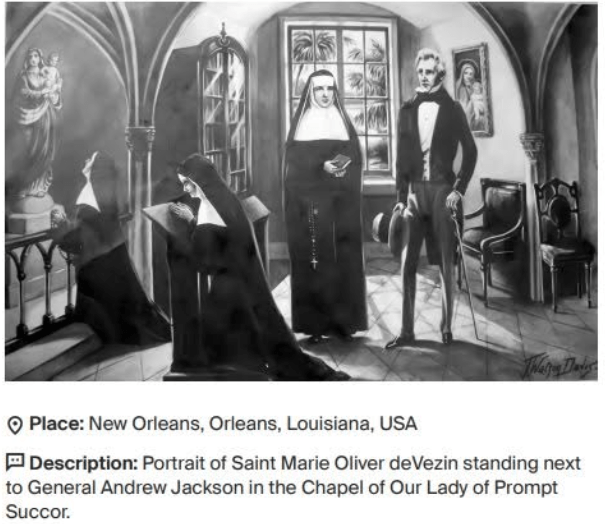
On the night of January 7-8, 1815, the Ursuline Convent was filled with the Sisters and the women of New Orleans. All were fervently praying as the Battle of New Orleans, between the United States and England, was about to fully commence. The American forces were severely outnumbered, with the majority of the troops being untrained and inexperienced, having been drafted by Gen. Andrew Jackson only a month prior. The Sisters and citizens vowed to Our Lady that if the United States won, they would always offer an annual Mass of thanksgiving.
Despite overwhelming odds, in less than two hours the Americans shot the British general and wounded 2,000 troops while losing only 65 of their own. Gen. Andrew Jackson publicly acknowledged afterward that victory was won by heavenly intervention and even personally came to the Ursuline Convent with his staff to thank the Sisters for their prayers.
Our Connection to Our Lady of Prompt Succor
The Ursulines and Franciscans have always been closely linked because the founder of the Ursulines, St. Angela Merici, was a member of the Third Order of St. Francis and was even buried wearing the Franciscan habit. Besides this, our convent in particular has a special connection with Our Lady of Prompt Succor. She is one of our special patronesses, and her image hangs within our walls. It was she herself who came to our aid when we urgently needed to find a new home. Minutes after praying to her at her shrine in June, 2025, we received a call from a benefactor who offered a home for the Sisters. In thankskgiving, we made a pilgrimage to her this past month and, within days, we received an answer to another very urgent prayer. We owe her a deep debt of gratitude and encourage all who read this to have recourse to her.
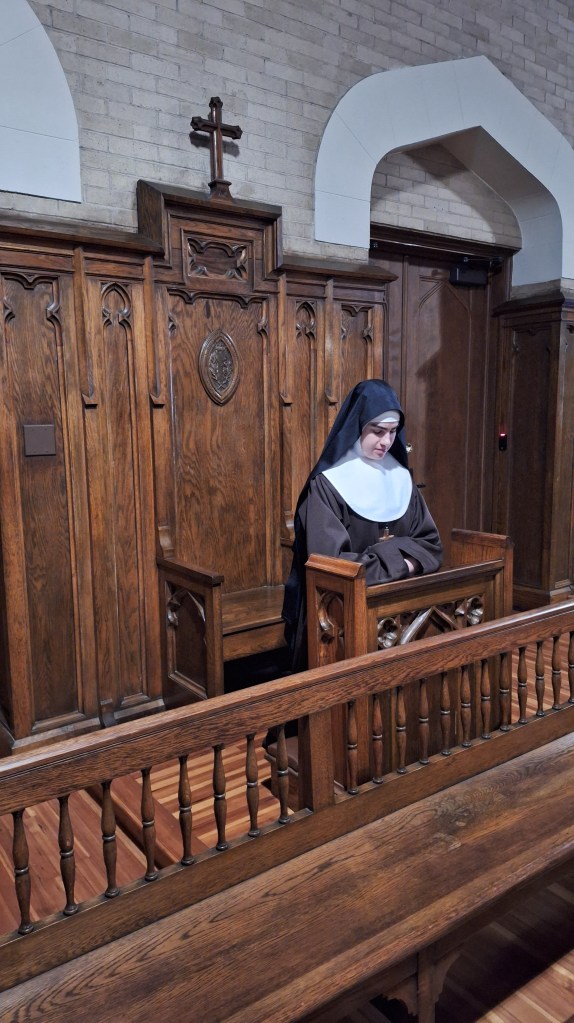
One of the Sister’s prays in the choir stall of the Superior of the Ursuline Convent
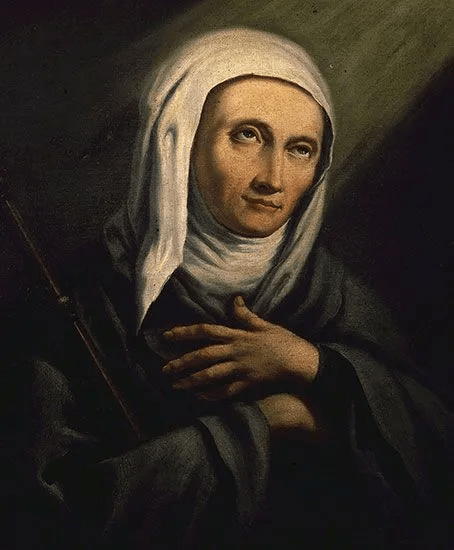
St. Angela Merici was born in Desenzano, Lombardy in Italy. She was orphaned with her sister at the age of 10 and they then lived with her uncle in Salo, Italy. Upon the death of her sister, Angela dedicated her life to the service of God in His Church, becoming a Franciscan Tertiary at the age of 13, practicing many severe penances. She loved poverty so much that she lived on alms, slept on the bare earth, and fasted to such an extent that sometimes Holy Communion was her only nourishment for several days.
She was very concerned when her sister died without the last rites, but God permitted her a vision where she saw her late sister in the company of the saints. When she was 20 she moved back to Desenzano upon the death of her uncle and was horrified to see the lack of religious education given to young girls there. She herself taught them their catechism, how to pray, and how to prepare for and fittingly receive the Sacraments.
In 1506, as she prayed in the fields of Brudazzo, Our Lord Jesus Christ granted her a vision in which he instructed her to found an institute where she and other consecrated women would devote their lives to the religious instruction of young girls, helping the poor, and caring for the sick.
She gathered together a group of young women with little to no resources, living in their family homes at first. They would meet together, with St. Angela often reminding them: “Reflect that in reality you have a greater need to serve [the poor] than they have of your service.”
Because of her saintly conduct and profound knowledge of God and the things of heaven, she was regarded by all as a saint, causing her to leave her hometown in 1516 to move to Brescia until 1524.
Even the Pope had heard of her sanctity and attempted to detain her in Rome when she made came back from making a pilgrimage to the Holy Land and the tombs of the Apostles. When he understood that it was by Divine inspiration St. Angela was to found in Brescia, he allowed her to return. However, it was not until 1531 when Angela could perform her intended work, due to disturbances caused by war. Then, on November 25, 1535, Angela and 28 companions consecrated themselves to God, officially founding the Congregation of St. Ursula, or the Ursulines. St. Ursula was chosen as the special patron of St. Angela’s work because she viewed Ursula as the ultimate model of consecrated virginity, intelligence, and spiritual leadership.
At age 70, the date and hour of Angela’s death were revealed to her. Upon receiving the last Sacraments she was wrapt in ecstacy. She died on January 27, 1540 with the holy Name of Jesus on her lips. She lies buried, dressed in the habit of the Third Order and with her pilgrim’s staff in a side chapel of the church of St. Afra in Brescia. She was beatified by Pope Clement XIII in 1807 and canonized in 1807 by Pope Pius VII. Her feast is celebrated by the Capuchins on June 1st.
On Ash Wednesday, the narrow path officially begins with the imposition of the blessed ashes. By imprinting them on our foreheads, the Church repeats over each of us, as a reminder, the sentence that God once pronounced over Adam: “Remember, man, that thou art dust and into dust thou shalt return.”
Remember. Don’t be forgetful; don’t try to forget. Remember, and don’t let the pleasures and attractions of this world distract your mind from your innermost reality. Remember that you were not born of yourself and that you were taken from the dust of the earth. Remember that nothing you have is truly yours and that you will have to answer for what you have done with it. Remember that day when you will give an account of your entire life. Remember that you have an immortal soul, but your body will dissolve into decay. Remember that the only thing that makes you acceptable to God is your good works. Remember the statement of your divine Redeemer:”…they that have done good things shall come forth unto the resurrection of life; but they that have done evil, unto the resurrection of judgment.” Remember it, and don’t think you can change it. Remember that one day you will die, and if you haven’t worked hard for your salvation, you will have lost everything. Remember the strict relationship between your behavior and your eternity. Remember that there are two paths: one wide and fun that leads to perdition and one narrow and arduous that leads to eternal life. Remember that God placed His very Life in your hands so that you may make It the center of your life. Remember that God is waiting for you to be saved, not to follow the path of those who do not know Him. Remember the Laws of God and follow them, and you will secure your eternal destiny. Remember the examples that God set for you, some to teach others a lesson and others to imitate. This is also part of the teaching of the Catholic Church. Remember your catechism, and adjust your life to it; nothing will be more beneficial to you in this life. Remember that you were not born for yourself, but for others. Remember that your neighbor is the image of God. Remember that you have the image of God within yourself, to cultivate and develop it through charity. Remember that you can deceive yourself, and do not listen to yourself, but seek advice in every situation. Remember that the most pleasing offering you can make to God is to acknowledge your inherent insufficiency and your need for Him. Remember that there are things to love and things to use; things from heaven to love and things from earth to use. Heavenly things are the end; earthly things are the means to achieve them.
We could endlessly continue the list of “remembers” going through all the points of Catholic doctrine, and each one of us could do the same for our own personal use, which would be very good because, when our mind and heart are occupied with heavenly things, they are in their own element. The Catholic Church, faithful to the task entrusted to it by its divine Founder, desires to structure our minds during Lent into two main points. Our task, on the other hand, is to understand this structure, accept it, and assimilate it. These are three necessary steps for progress in our Catholic life: to know, to accept, and to assimilate.
Progress means going from good to better. The Italians have a saying that goes, “the same as before, worse than before.” If we reach a certain age where we consider ourselves adults and continue with the same old vices, we have that case: we are worse than before because we are spiritually stagnant, our spiritual life has not developed, it does not exist. Oh, miserable human condition! All this can happen to us even if we attend Mass, pray the Rosary, and wear the Brown Scapular. However, the eternity of our soul is our hope, since every moment of our life is unique, eternal, and therefore redeemable. It is enough that we adapt ourselves, not only in our behavior, but also in our understanding and our desires, to what the Catholic Church teaches us. One of our greatest obstacles is truly coming to recognize ourselves as our own worst enemies. The more we listen to ourselves, the less we are able to listen. The two points that the Church desires to emphasize during Lent are the need to take take the narrow path and the hope of achieving the eternal reward through our cooperation in our own redemption.
Hence, Lent can be seen as the ideal of Catholic life and as a reminder of eternal life. From the first point of view, the Church teaches us that if we want to reach heaven or understand and love God more, we must put aside some things. In this case, She simply reminds us of the essential doctrine of life: “I am delighted with the law of God, according to the inward man: But I see another law in my members, fighting against the law of my mind and captivating me in the law of sin, that is in my members. Unhappy man that I am, who shall deliver me from the body of this death?” Or, “They who are in the flesh cannot please God.” Or, “If I yet pleased men, I should not be the servant of Christ”.
The other point on which the Church wants us to stand firm is the certainty of eternal life and our aspiring to it. Thus, Lent is presented to us as a reminder of our temporary life, which passes and will never return, and Easter is presented to us as a reminder of eternal life. From this point of view, our attention is focused on what we must do, and from the second point of view it is focused on what we expect. Let us not fail to do what is our responsibility as children of God and of the Catholic Church, and let us always aspire to the best.
May the Blessed Virgin Mary, Mediatrix of all grace, teach us this path of strength and wisdom.
In the outside world, in the darkness of midnight, silence is broken by horns, noisemakers, and drunken cheering. A small group of hidden adorers will spend these same moments in silent adoration of the Lord of all creation, in reparation for the outrages, sacrileges, and indifference by which He is everywhere offended.
Our Lord has so few friends… won’t you offer these precious moments to Him in whatever capacity your duties of state will allow?
Prayers of profound gratitude for the past year’s blessings will be offered, and each of you, our dear families, friends, and benefactors, will be remembered. May He draw you each closer to His Sacred Heart!