
By an anonymous Franciscan Friar
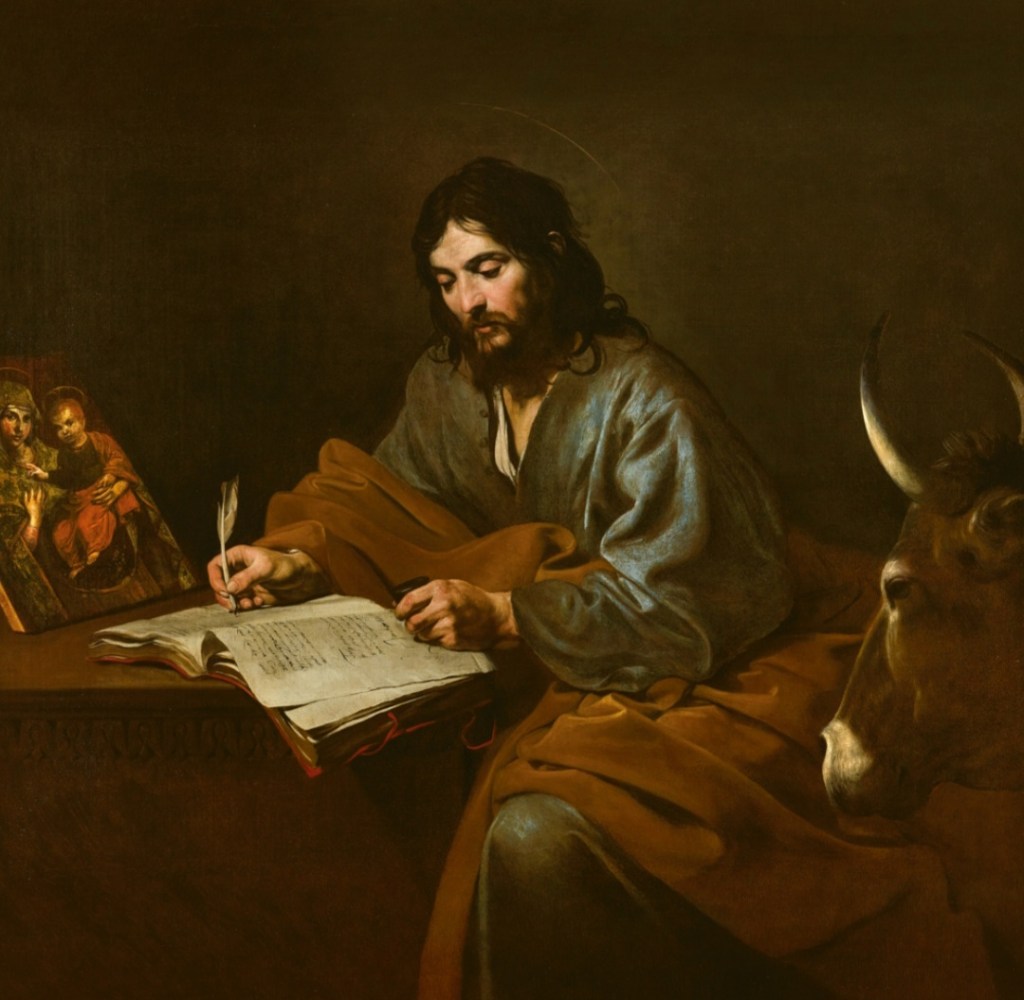
Little is known about the life of St. Luke. His greatest glory in the eyes of the Church is having been chosen by God to be the author of the third Gospel that bears his name, as well as the Acts of the Apostles, an account of the early years of the Church’s life. The means by which God introduced him to this sacred activity were varied, but primarily through his relationship with the Apostle, St. Paul, of whom he was an inseparable and tireless companion.
St. Paul was, so to speak, the first “commentator” on the Gospel, that is, the first to expound and develop the mystery of Christ; for the Gospel is precisely that: the account of the nature and the work of Our Lord Jesus Christ. He called St. Luke “our most beloved physician.” St. Jerome says about our Saint: “St. Luke was a disciple and inseparable companion of St. Paul; he was born in Antioch and practiced the profession of a physician, while also cultivating literary pursuits, becoming highly versed in the Greek language and literature. His literary taste is evident in that exquisite account he left us regarding the origins of Christianity, a narrative that, in many respects, is more complete than those of the other evangelists, better organized, and altogether more pleasant to read.” These books by St. Luke are a valuable historical synthesis of the origins of Christianity during the first period of the first century, before the year 60. They belong to the Canon of the Scriptures that is, to the authentic list of books inspired by God from both the Old and New Testament. In 1740, an Italian named Muratori compiled a catalogue of sacred books that had been compiled in Rome between the years 180 and 200. The tradition of the Roman Church is set forth in it, and it is in perfect agreement with the most ancient testimonies from both the West and the East, for example: St. Irenaeus, Tertullian, Clement of Alexandria, and Origen, among others.
Antioch, the birthplace of St. Luke, was at that time the principal city of the East. People from all over gathered there; imperial delegates and numerous Jewish communities were also present. The disciples of Christ came to this place as well; Barnabas was sent there, bringing with him St. Paul, who had recently converted. St. Peter also took up residence there to organize the nascent Church of Christ. Antioch served as the center and primary focal point of the new religion for nine years, until the Prince of Apostles moved to Rome.
St. Luke was a witness to the martyrdom of St. Paul in Rome in the year 67, and from that year on, we lose track of him. We are left with only a few accounts; for instance, St. Epiphanius states that he preached in Italy, France, Dalmatia, and Macedonia, while another asserts that his mission extended to the regions of Egypt and Libya. A reading, even a quick one, of the Acts of the Apostles reveals his apostolic adventures during the early years of his life.
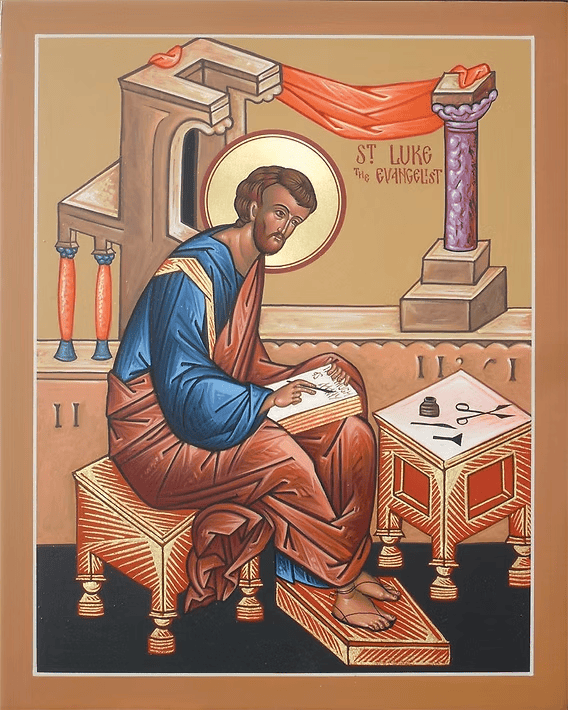
Let us praise St. Luke for his dedication and perseverance in the service of God, and let us regard him as a model of life and an intercessor before God. His Gospel offers us a very special perspective. St. Jerome calls him the Evangelist of the meekness of Christ. He left us precious documents regarding the importance of the role of the Blessed Virgin Mary in the life of Jesus Christ, as well as details about the childhood of our beloved Savior, both of Whom he always presents together. We owe to him the accounts of the adulterous woman, the Good Samaritan, the Prodigal Son, the good thief, and the disciples of Emmaus.
Dom Prosper Gueranger, in his work “The Liturgical Year”, says the following regarding the day of his feast: “Throughout his account, one senses his careful intent to instill in us confidence in ‘the goodness and love of our Savior,’ Who came to save ‘all men.’ He seeks to convince us that all people, no matter how wretched they may be, whether in the physical or the moral realm, ,can come to this Savior to be healed; a Savior of Whom he had heard from the Apostles, the first disciples and, in all likelihood, the Blessed Virgin Mary as well. He wants us to take Jesus’ affectionate words: ‘To you, my friends, I say this…Do not fear, my little flock…’ as our own, addressed personally to us. Indeed, as one reads, it feels as though the gaze of Jesus rests upon us all during His Passion, and not merely upon St. Peter.”
But let us remember that the best form of praise is found in our virtues, above all, through the imitation of Christ and His most holy Mother. So let us reflect upon and put into practice, just as St. Luke did, these words from his teacher, St. Paul: “Let this mind be in you, which was also in Christ Jesus…Put ye on therefore, as the elect of God, holy, and beloved, the bowels of mercy, benignity, humility, modesty, patience: Bearing with one another, and forgiving one another, if any have a complaint against another; even as the Lord hath forgiven you, so do you also.”
Let us not grow weary in doing good, for in due time we will receive our reward. May the Blessed Virgin Mary always cover her with her mantle, defend us, protect us, and teach us the path of holiness.


Leave a Reply