
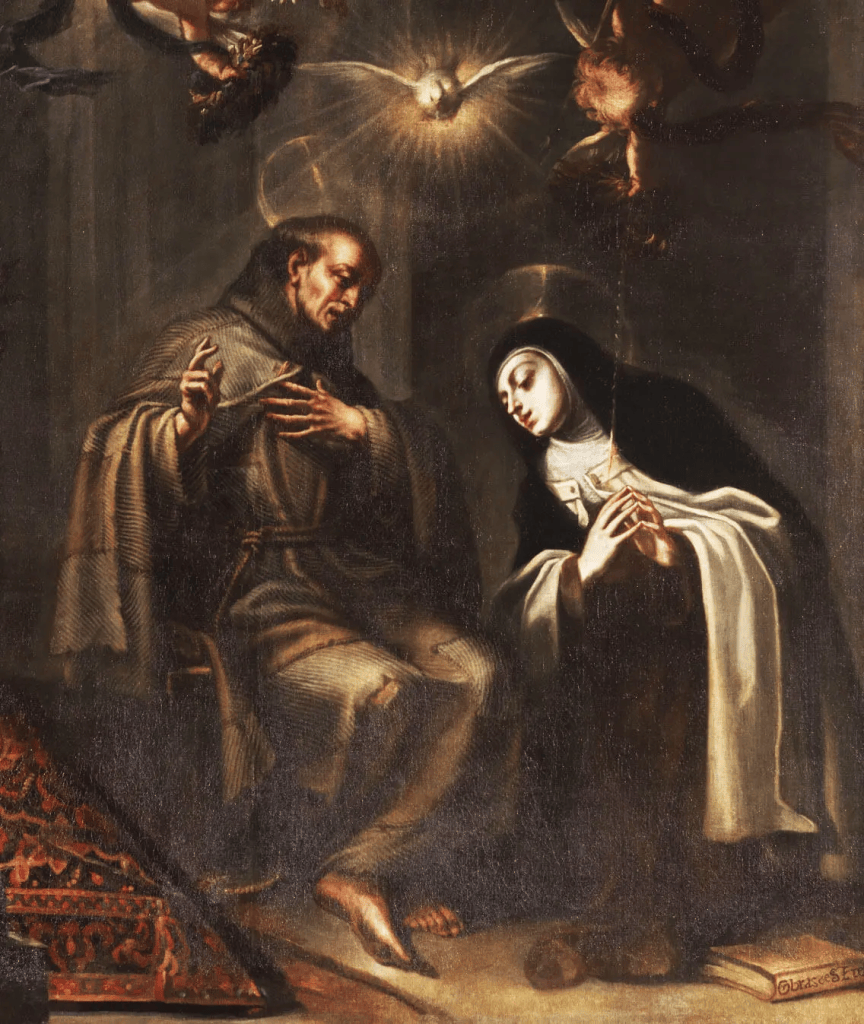
The Legacy of St. Peter
[Let us take notice of God’s] Fatherly providence, that in process of declining times, when the Blood of our Redeemer hath often begun to wax cold in the hearts of men, He would not suffer it altogether to be extinguished, but according to variety of times, never ceased to repair His Church, by the ministry of some elected servants, whom He sent into this world as second Apostles, who by their example and doctrine, might draw men out of the mire of their sins, renew the fervor of our Blessed Saviour’s Passion, and reduce collapsed discipline to her former rigor. Many hath He sent for this end, and amongst many this blessed saint, St. Peter de Alcantara, a man, from his very cradle, consecrated to evangelical perfection; he was a faithful laborer in our Lord’s vineyard, with great fidelity performing his commanded task, as it will plainly appear by that which followeth in his life. [1]
Christ declares the spirit and constant practice of penance to be the foundation of a Christian or spiritual life. This great and most important maxim, which in these latter ages is little understood, even amongst the generality of those who call themselves Christians, is set forth by the example of this saint to confound our sloth, and silence all our vain excuses. [2]
The Life of St. Peter
St. Peter was born in Alcántara, Spain in the year of our Lord 1449, in the reign of Pope Alexander the Sixth, and Ferdinando, Catholic King of Spain. [3] His father, Alphonso Garavito, was a lawyer and governor of that town; his mother was of good extraction, and both were persons eminent for their piety and personal merit in the world [4]. Even as a child he showed he possessed a remarkable gift of prayer, to the point that if he became absorbed in prayer, the servants could not get any response from him. [5]
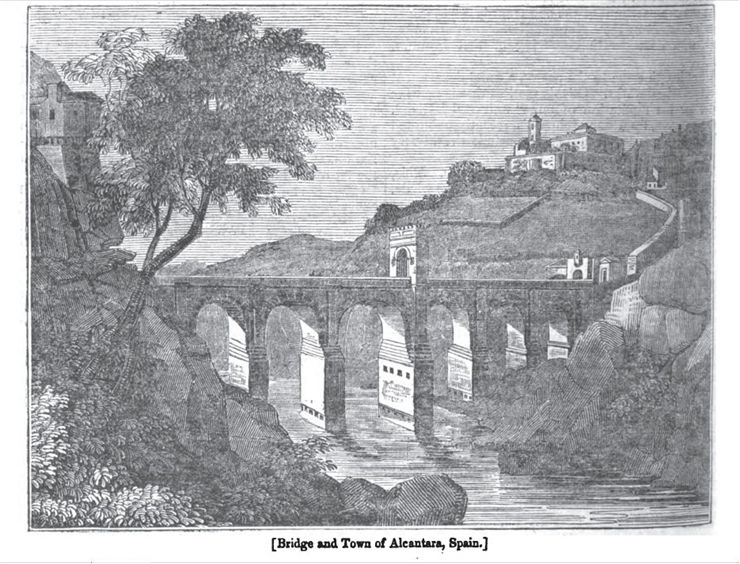
In these, his tender years, he addicted himself to the works of mercy: he applied himself seriously to learn the Christian doctrine; he often visited churches, and holy places, he frequented the sacraments, and continually employed himself in good works. [6]
At 16, He opened the doors of his soul to the inspirations of the Holy Ghost: and as he excelled his fellow students in science, so he knew that all science was ignorance without the right knowledge of God. Therefore, from that time forward he applied his mind to heavenly wisdom, and busied himself chiefly to know what should be most acceptable to his Sacred Majesty. [7]
He had not finished his philosophy [studies] in his own country, when his father died. Some time after this loss he was sent to Salamanca to study the canon law at the university there. During the two years that he spent in that university, he divided his whole time between the church, the hospital, the school, and his closet [8].
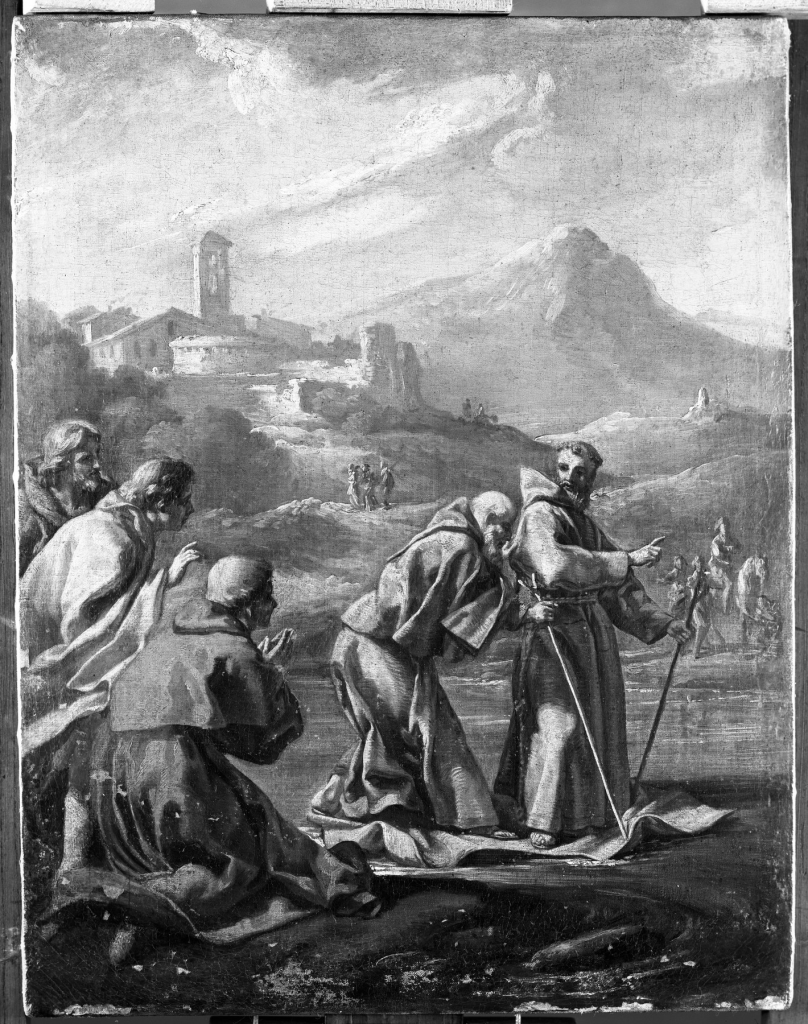
It was here Peter resolved to join the Franciscan Order. The tempter left nothing undone to depict the comfortable life he could lead in the world and still have time for the practices of piety. [9] On the other side, listening to the suggestions of divine grace, he considered the dangers of such a course, and the happiness and spiritual advantages of holy retirement [10]. Humble prayer overcame the seductions of the evil one. At 16, Peter set out for the quiet convent of Monjarez. On the way Our Lord gave him a signal assurance of his vocation. Peter came to a stream which, because of the heavy rains, had overflowed its banks considerably. Seeing no means at hand with which to cross, he knelt down and asked God for help. Suddenly, without knowing how, he found himself of the other side. [11]
Once received into the Order, he gave himself up completely to union with God. That his eyes and other senses might be more easily kept under the government of reason, and that they might not, by superfluous curiosity, break in upon the interior recollection of his mind, – such was the restraint he put upon them – that he had been a considerable time a religious man without ever knowing that the church ceiling of his convent was vaulted. [12] In fact, there are numerous examples that tell us St. Peter had perfect custody over his eyes throughout his life. For instance, from the time that he put on the religious habit to his death he never looked any woman in the face.
These were the marks of a truly religious man, who studied perfectly to die to himself. [13] It was the same for his other senses. His food was for many years only bread moistened in water, or unsavoury herbs [14] and his body seemed to have been given him only to inflict pain on it. The mortifications he practiced upon divine impulse were amazing. For more than twenty years he wore an iron belt studded with sharp points which pierced his flesh. At first he was much troubled with sleepiness, but he so mortified himself that in time he got along with one and a half hours of sleep in a day; and this rest he took while sitting on the floor. [15]
God showed His approval of these mortifications by sustaining Peter’s strength in a remarkable way. He never tired of going from place to place to give missions, and his success was so astounding that St. Francis Borgia once wrote to him:
“Your remarkable success is a special comfort to me.”
His various activities, however, in no way diminished his spirit of prayer. He lived and toiled in this spirit, and endeavored to impart it to others. [16]
The custom of erecting a cross at the close of a mission had its origin with St. Peter of Alcántara. Wherever feasible, he had the cross erected on an elevation, so that it could be seen all over the parish. On one occasion he was so literally carried away with devotion that he sped through the air to such a cross, where with arms outstretched he prayed a long time, while rays brighter than sunlight proceeded from his person. [22]
At the age of 20, St. Peter was obliged by obedience to be the Superior of a newly established friary in the metropolis of Estramadura. However, neither when he was promoted to superiority did he leave off his humble exercises, serving his fellow brothers in what ways he could. [17] After three years he received his provincial’s command to prepare himself for holy orders. Though he earnestly begged for a longer delay, he was obliged to acquiesce, was promoted to the priesthood in 1524, and soon after, was employed in preaching. [18]
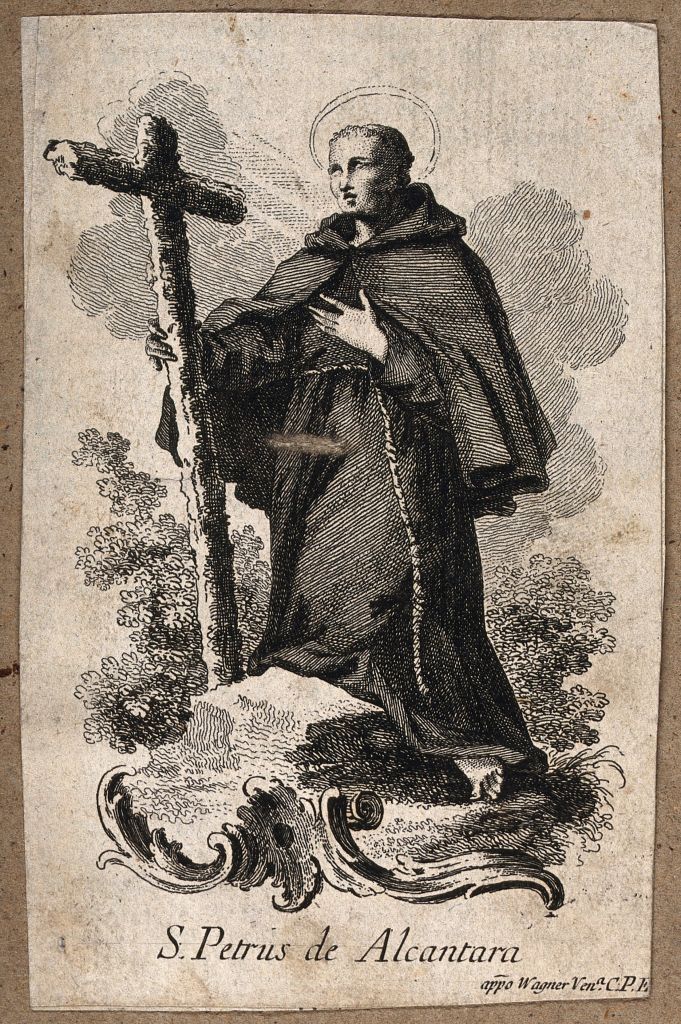
The sufferings of Christ were the special object of his devotion. As Christ sacrificed Himself for us, Peter found nothing too difficult in His service; and as Christ atoned so severely for our sins, Peter practiced the most rigorous penance. [19] His devotion was much more augmented at the altar, when he celebrated the dreadful sacrifice, then would rivers of tears gush in abundance from his venerable eyes, that would move the most stony and obdurate heart of any of the standers by unto compunction. [20] By the maxims of the gospel, and the spirit of God, which directs all the saints, a deep sense was impressed upon his soul of the obligation which every Christian lies under of making his whole life a martyrdom of penance, to satisfy the divine justice both for past and daily infidelities, to prevent the rebellion of the senses and passions, and to overcome the opposition which the flesh and self-will raise against the spirit, unless they are entirely subdued, and made obedient to it. Neither can God perfectly reign in a heart, so long as the least spark of inordinate desires is habitually cherished in it. [21]
At the solitary convent of St. Onuphrius, at Lapa, near Soriana, he wrote A Golden Treatise of Mental Prayer, which has been celebrated the world over. This excellent little treatise was justly esteemed a finished masterpiece on this important subject by St. Teresa of Avila, Lewis of Granada, St. Francis of Sales, Pope Gregory XV, Queen Christina of Sweden, and others [23]. Pope Gregory XV declared that it was written under the inspiration of the Holy Ghost and St. Teresa of Avila, who lived at that time, wished to have the saint for her spiritual director. The saint, whilst in quality of commissary made the visitation of several monasteries of his Order, arrived at Avila in 1559.
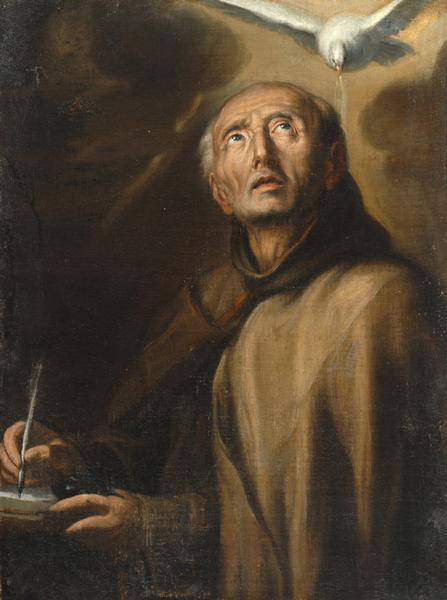
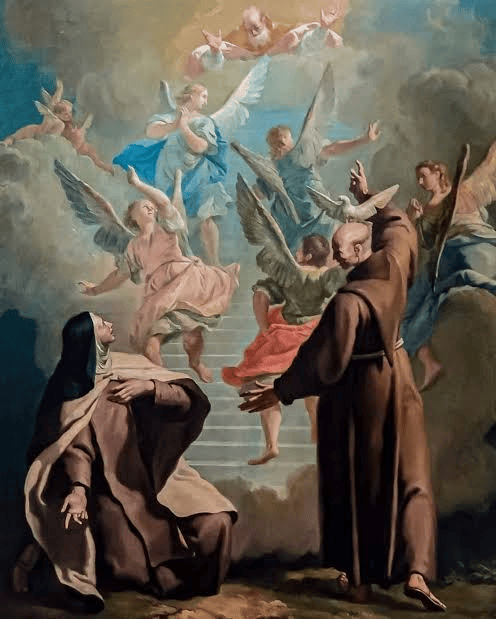
St. Teresa laboured at that time under the most severe persecutions from her friends and her very confessors, and under interior trials from scruples and anxiety, fearing at certain intervals, as many told her, that she might be deluded by an evil spirit… St. Peter, from his own experience and knowledge in heavenly communications and raptures, easily understood her, cleared all her perplexities, gave her the strongest assurances that her visions and prayer were from God, loudly confuted her calumniators, and spoke to her confessor in her favour. He afterwards exceedingly encouraged her in establishing her reformation of the Carmelite Order, and especially in founding it in the strictest poverty. [24]
in 1538, he was obliged to accept the position of provincial of the province of St. Gabriel, or of Estramadura, which, though it was of the conventuals, had adopted some time before certain constitutions of reform. The age required for this office being forty years, the saint warmly urged, that he was only thirty-nine; but all were persuaded that his prudence and virtue were an overbalance. Whilst he discharged this office he drew up several severe rules of reformation, which he prevailed on the whole province to accept in a chapter which he held at Placentia for this purpose, in 1540. Due to his efforts his province rose to a flourishing state of religious discipline. Provincial though he was, he did not hesitate on occasion to perform the lowliest duties in the house. [25]
[St. Peter], being a very humble man, fled from honors. Emperor Charles V wanted him for his confessor, but Peter begged him not to press his request since he could easily secure more learned and eminent men.
in 1541, he returned to Lisbon, to join F. Martin of St. Mary, who was laying the foundation of a most austere reformation of this Order reduced to an eremitical life, and was building the first hermitage upon a cluster of barren mountains called Arâbida, upon the mouth of the Tagus, on the opposite bank to Lisbon. The Duke of Aveiro not only gave the ground, but also assisted them in raising cells. St. Peter animated the fervour of these religious brethren, and suggested many regulations which were adopted. [26]
He was humble and charitable in his judgments. A nobleman was once decrying the various evils which were rampant. The saint said: “Truly, matters in the world are in a bad state; but if you and I begin in earnest to reform ourselves, a really good beginning will have been made.” [27]
Finally, on October 18, 1562, he died peacefully in the Lord, and in a vision, St. Teresa saw his soul take its flight to heaven. Later he appeared to this saint and said: “O happy penance that has merited for me such wondrous glory!” St. Teresa also related what Our Lord said about this glorious saint. [28] “Our Lord told me once that men should ask nothing in his name, wherein he would not hear them.—I have recommended many things to him, that he might beg them of our Lord, and I have always found them granted.” [29] Indeed, many miracles, including the raising of six dead persons to life, occurred in answer to prayers addressed to him. Pope Clement IX enrolled him among the saints in 1669. [30]
REFERENCES:
[5], [9], [11], [15], [16], [19], [22], [25], [27], [28], [30] – Habig, Marion A. The Seraphic Order: A Traditional Franciscan Book of Saints. Mediatrix Press, 2020
[1], [3], [6], [7], [17], [20], – Peter of Alcantara, Saint. A Golden Treatise of Mental Prayer: With Divers Spiritual Rules and Directions, No Less Profitable, than Necessary, for All Sorts of People. Translated by Giles Willoughby, M. Fithian, 1844. Internet Archive, https://archive.org/details/goldentreatiseof00pete.
[2], [4], [8], [10], [12], [13], [14], [18], [21], [23], [24], [26], [29]- ajeyaseelan. “St. Peter of Alcantara, Confessor – Collection at Bartleby.Com.” Collection at Bartleby.Com, 12 Jan. 2023, https://www.bartleby.com/lit-hub/lives-of-the-saints/volume-x-october/st-peter-of-alcantara-confessor/.


Leave a Reply